Oval Diamond Guide: How to Choose the Perfect Oval Cut
The oval diamond has quietly become one of the most requested shapes in fine jewelry, and for good reason. It pairs the fire and sparkle of a round brilliant with an elongated silhouette that flatters the hand and appears noticeably larger than a round diamond of the same carat weight.
If you have ever admired an engagement ring that looked both classic and distinctly modern, there is a strong chance it was set with an oval. This guide walks you through everything that matters when choosing one.
What Exactly Is an Oval Diamond?
An oval diamond is a brilliant-cut stone, sharing the same faceting style as a round brilliant, with around 57 to 58 facets engineered to maximize the return of light. The difference is the outline: instead of a perfect circle, the oval is an elongated, rounded shape with no sharp corners.
That faceting is the key to its appeal. Because it is cut for brilliance rather than for step-like clarity, an oval delivers exceptional sparkle while its stretched shape creates an elegant, finger-lengthening look.
The Biggest Advantage: It Looks Larger
Because the shape spreads the weight of the diamond across a longer surface area, an oval presents a larger face-up appearance than a round diamond of identical carat weight. In simple terms: a 1-carat oval often looks bigger than a 1-carat round. For anyone who wants maximum presence for their budget, this makes the oval one of the smartest choices in the diamond world.
Understanding the Bow-Tie Effect
Every elongated brilliant cut can display what jewelers call a bow-tie: a shadow across the center of the stone. It is caused by light leaking out of the middle of the diamond rather than reflecting back to your eye.
A faint bow-tie is normal and present in almost every oval. What you want to avoid is a severe bow-tie that creates a dark, dull band across the center. This is the single most important thing to inspect when choosing an oval. At DAZZ, every oval is hand-selected so that light is distributed evenly across the entire stone, keeping that center bright and lively.
Choosing the Right Length-to-Width Ratio
The ratio describes how elongated the oval is, its length divided by its width. This is largely a matter of personal taste, but there are guidelines worth knowing:
- 1.30 to 1.50 is the classic, most popular range, a balanced and universally flattering oval.
- Closer to 1.30 gives a rounder, fuller look.
- Closer to 1.50 and beyond gives a longer, more dramatic silhouette.
How the 4 Cs Apply to Ovals
Cut. Unlike round diamonds, ovals do not receive an official cut grade from labs such as GIA. This makes the seller\u2019s expertise critical, because two ovals with identical specifications on paper can look completely different in person.
Color. Ovals can retain a little more color toward their points than rounds do. Many buyers are perfectly happy in the near-colorless range, where any warmth is subtle and the value is excellent.
Clarity. The brilliant faceting of an oval helps disguise small inclusions. An eye-clean stone is usually the sweet spot of beauty and value.
Carat. Thanks to the larger face-up appearance, you often get more visual size per carat with an oval than with most other shapes.
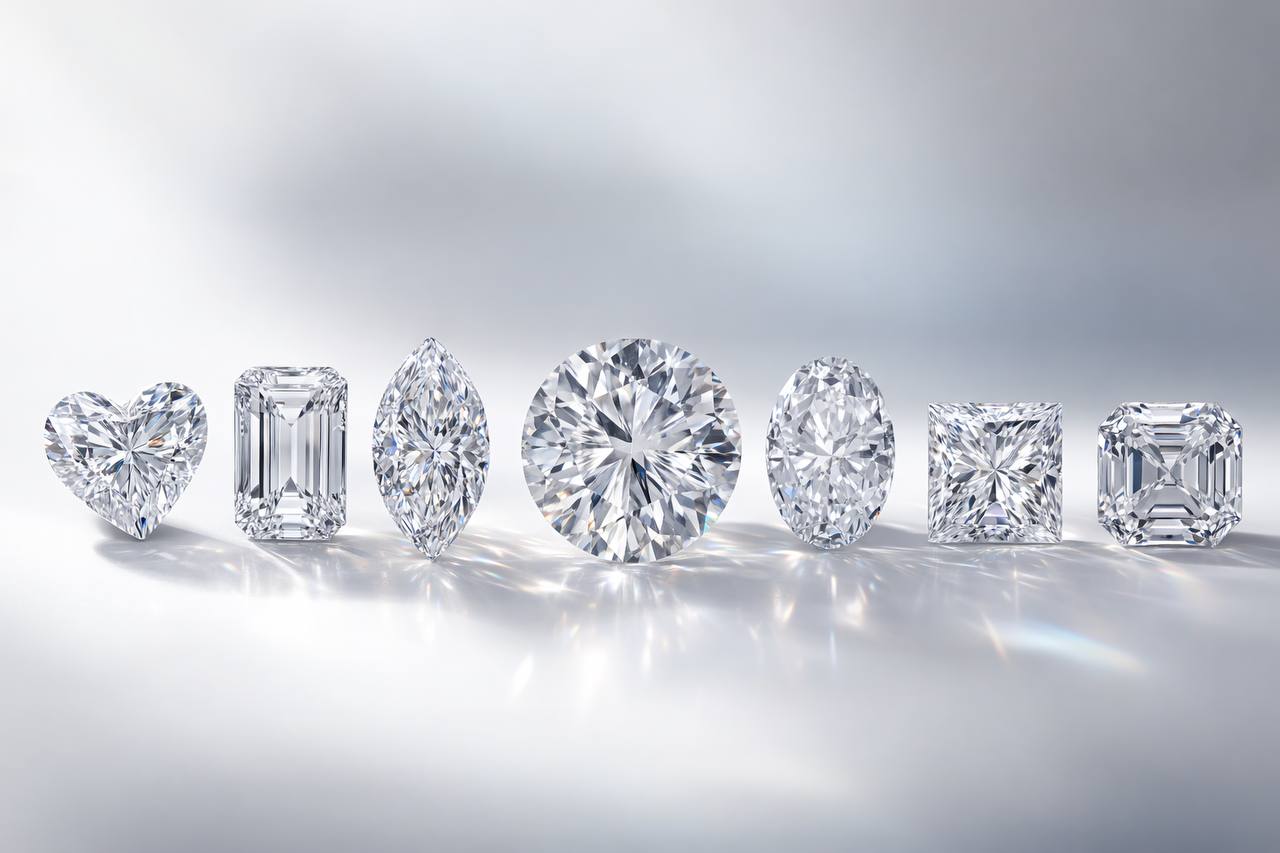
Oval vs. Round vs. Other Shapes
- Oval vs. round: Nearly identical sparkle, but the oval looks larger and more distinctive, and typically costs less per carat.
- Oval vs. emerald: The emerald cut has a sleek elegance but far less sparkle. Ovals win on brilliance.
- Oval vs. pear or marquise: All three are elongated brilliants. The oval is the most symmetrical and easiest to wear day to day.
How to Wear and Set an Oval
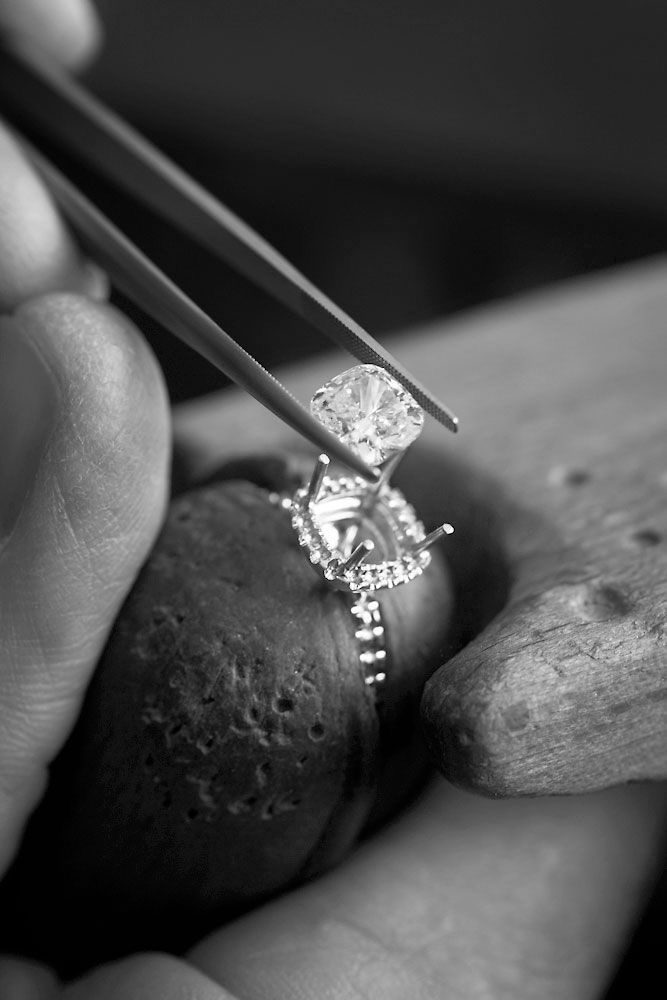
Ovals are wonderfully versatile. A simple solitaire lets the stone\u2019s brilliance speak for itself, while a hidden halo adds extra sparkle and the illusion of even greater size. The elongated shape also sits beautifully in pendants and stud earrings.
A few favorites from the DAZZ collection that showcase the oval beautifully:
- The VIA Solitaire \u2013 Oval, a pure, timeless solitaire ring that puts the oval center stage.
- The ORLANE Hidden Halo Ring \u2013 Oval, added brilliance through a delicate hidden halo.
- The Solitaire Pendant \u2013 Oval, an elegant everyday necklace.
- The Solitaire Studs \u2013 Oval, refined earrings that elongate beautifully.
- The Tennis Bracelet 15 Carat \u2013 Oval, a statement of pure brilliance along the wrist.
Lab-Grown or Natural?
Ovals are available in both natural and lab-grown diamonds, and both are genuine diamonds, chemically and optically identical. Lab-grown offers a larger or higher-quality stone for the same budget, while natural diamonds carry the rarity and heritage many buyers treasure. DAZZ offers both, all IGI or GIA certified.
The DAZZ Promise
Because ovals reward expertise more than almost any other shape, who you buy from matters. Every DAZZ oval is selected at the Israel Diamond Exchange and checked for even light return, a controlled bow-tie, and a flattering ratio. Each comes with IGI or GIA certification and free worldwide shipping.