2026 prices from the maker · Diamond Exchange, Ramat Gan
How Much Does a 2-Carat Lab-Grown Diamond Ring Cost?
At DAZZ, a 2-carat lab-grown diamond ring starts at $1,920: that is our Oval Solitaire Ring in 14K gold, with an IGI-certified D–E VVS2–VS1 center stone, insured shipping included. In the wider US market, a finished 2-carat lab-grown ring typically runs from about $2,000 to $7,500 in 2026, depending on the grade of the stone and the setting. This guide shows where every number comes from, how 2 carats looks on a hand, and what 1.5 or 3 carats costs instead.
By The DAZZ workshop team·Three generations of diamantaires at the Israel Diamond Exchange··Prices update automatically from our catalog
In this guide
Chapter 01
What a 2-carat lab-grown ring costs at DAZZ
Rather than quote a range, here are our own prices. The table is generated from the same pricing engine that runs our catalog, for the 11 settings we make most often, each with a 2-carat center stone in 14K gold, priced both ways. Every figure is for the finished ring: the center diamond with its certificate, the setting, gift packaging and insured shipping to your door.
| Setting · 14K gold | 2 ct lab-grownIGI · D–E · VVS2–VS1 | 2 ct naturalGIA · G–H · VS2 | Product page |
|---|---|---|---|
| Oval Solitaire Ring | $1,920 | $28,800 | See this ring |
| Round Solitaire Ring | $1,920 | $28,800 | See this ring |
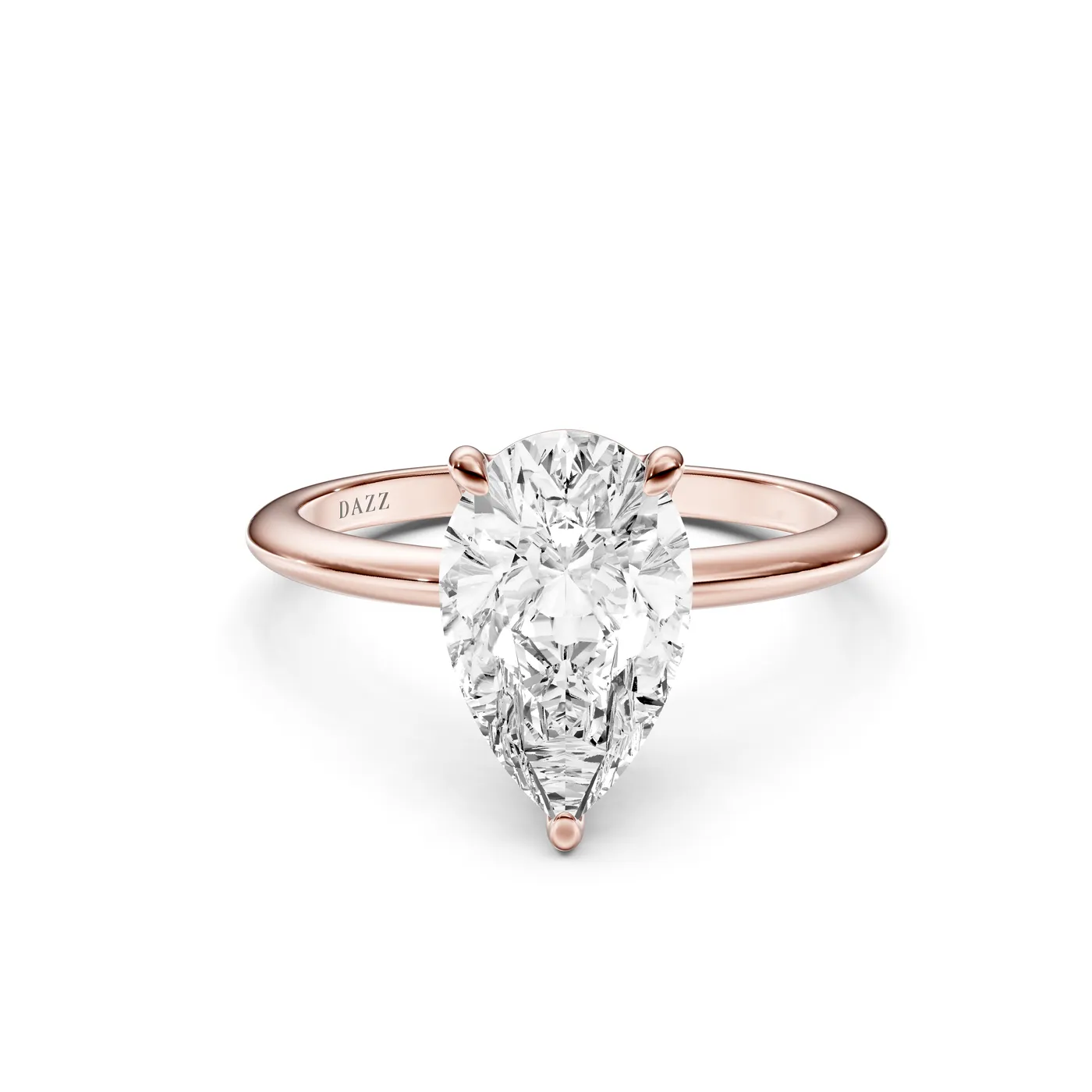
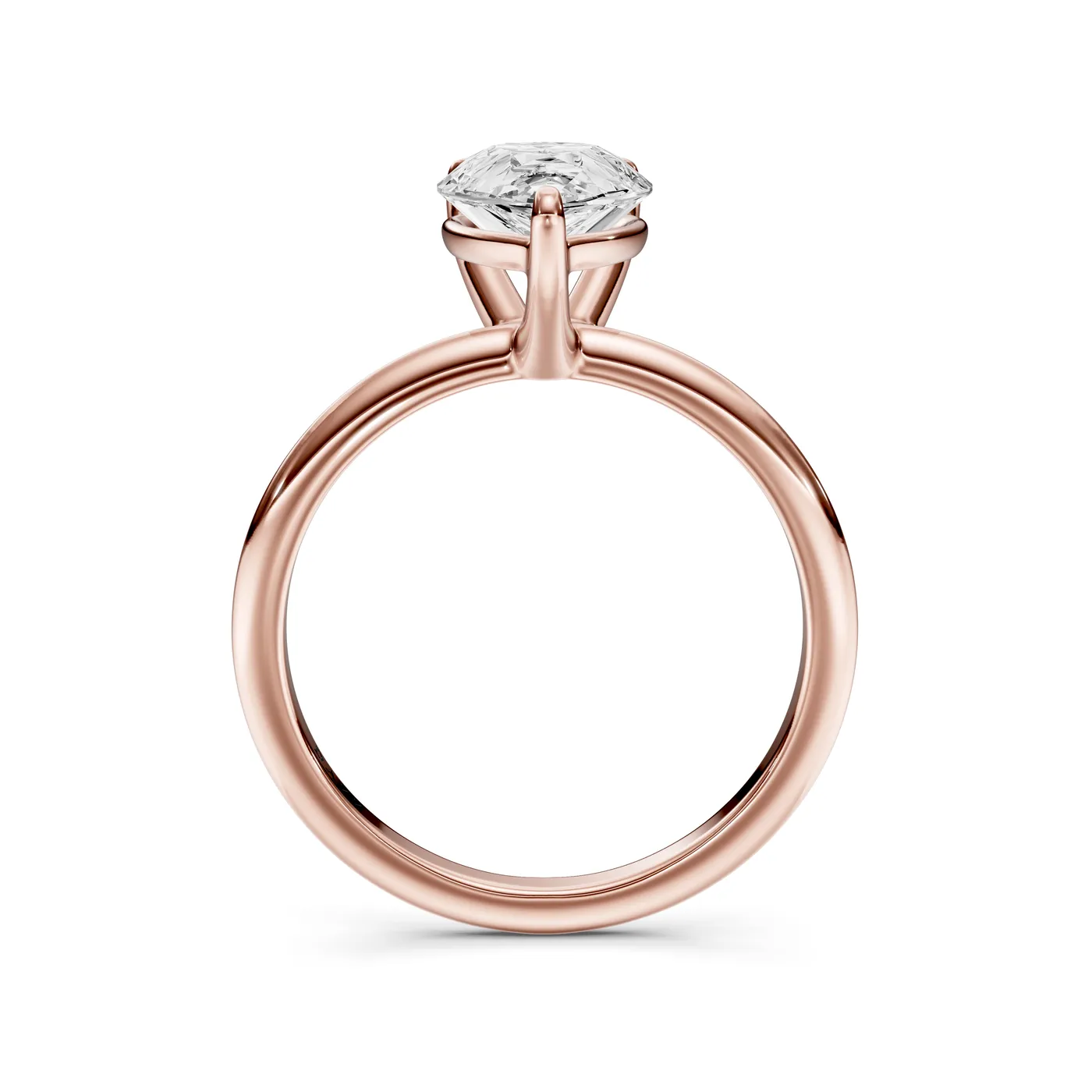
| Pear Solitaire Ring | $1,920 | $28,800 | See this ring |
| Emerald Solitaire Ring | $1,920 | $28,800 | See this ring |
| Cushion Solitaire Ring | $1,920 | $28,800 | See this ring |
| Radiant Solitaire Ring | $1,920 | $28,800 | See this ring |
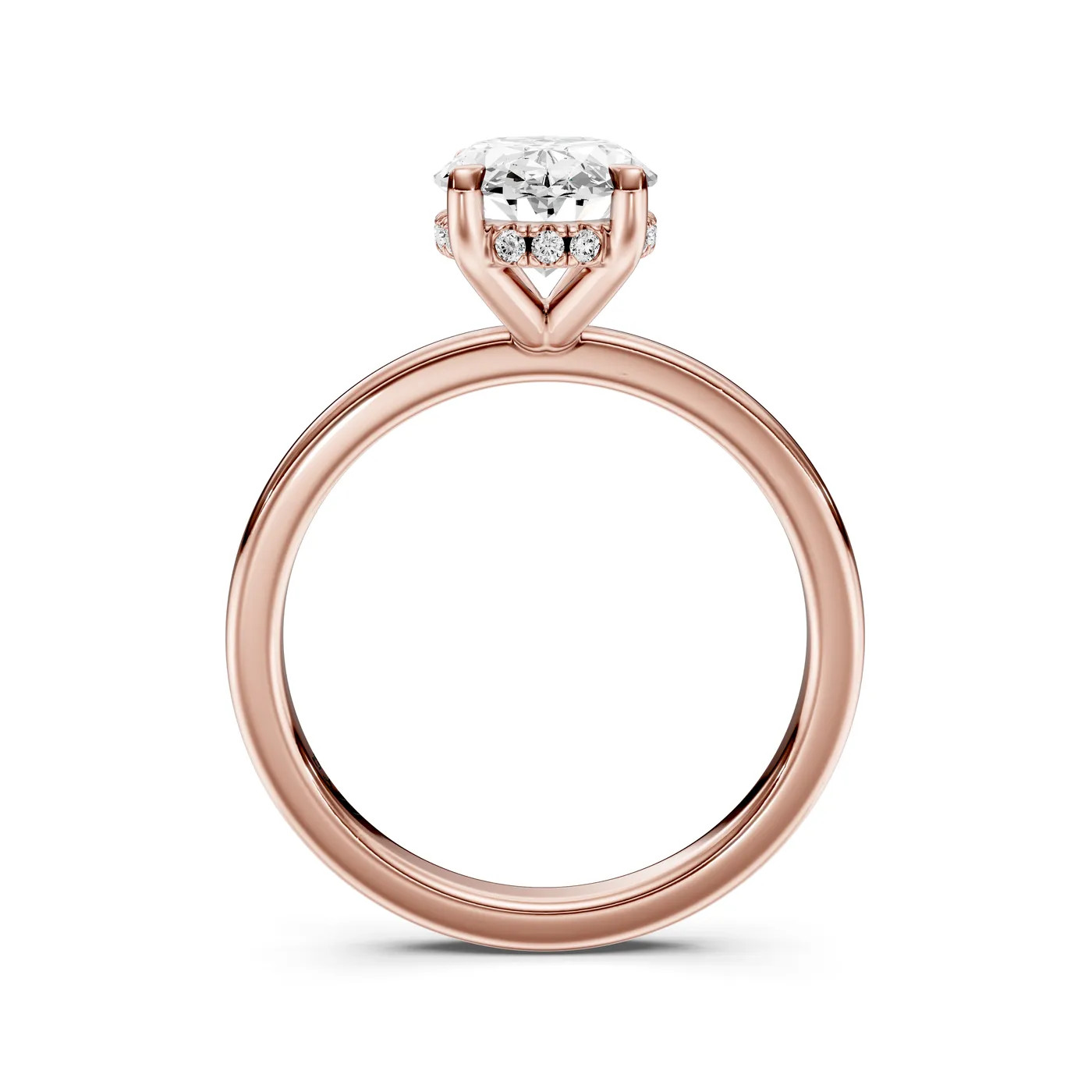
| Oval Hidden Halo Ring+ 0.15 ct of side diamonds | $2,020 | $34,800 | See this ring |
| Oval Halo Ring+ 0.15 ct of side diamonds | $2,020 | $34,800 | See this ring |
| Oval Pavé Ring+ 0.40 ct of side diamonds | $2,110 | $31,200 | See this ring |
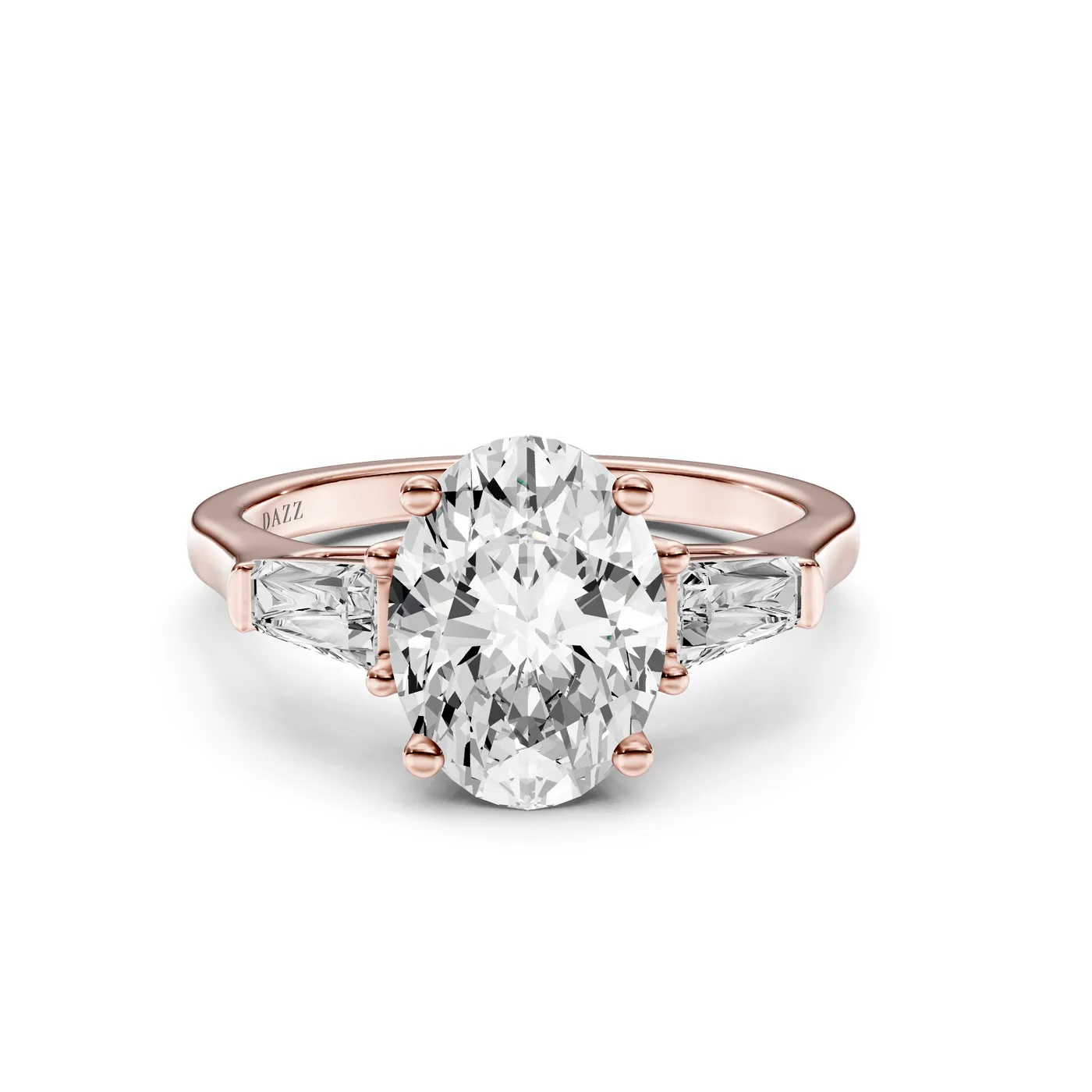
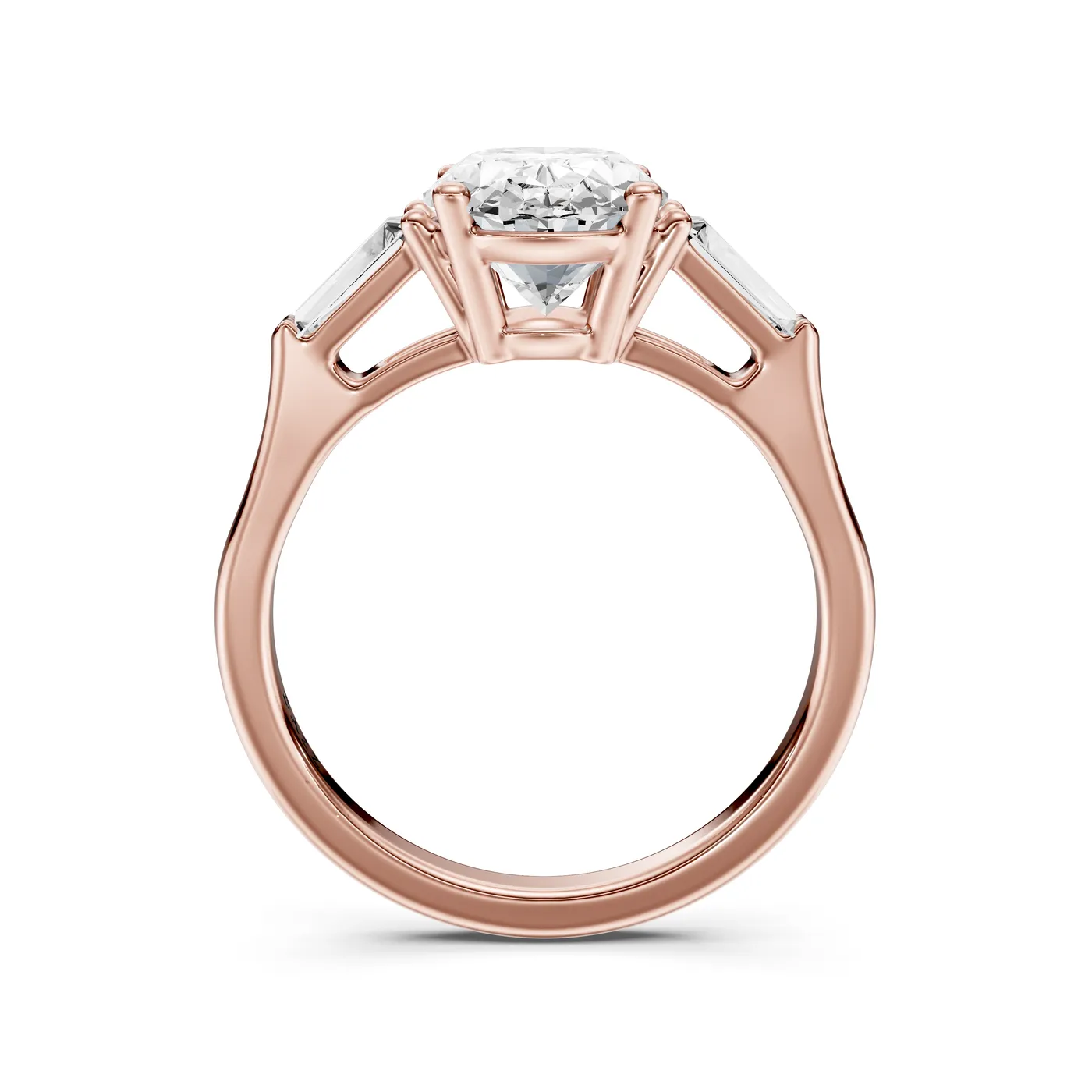
| Three-Stone Tapered Baguette Ring — Oval+ 0.50 ct of side diamonds | $2,300 | $37,440 | See this ring |
| DAZZ Ring — Oval+ 0.40 ct of side diamonds | $2,020 | $38,400 | See this ring |
Shipping included · import duties and taxes not included · Prices for the finished ring in 14K gold with a 2 ct center stone; side diamonds, where the design has them, are included; gold color does not change the price. At DAZZ the shape does not change the price either. See the full price list or price any ring at 2 carats in the builder.
IGI certificate · lifetime warranty · 14-day returns · first resizing free · insured shipping
See 2-carat ringsWhy the market range is so wide. By industry price guides, a finished 2-carat lab-grown diamond ring sells for roughly $2,000 to $7,500 in the United States in 2026. That is a wide range for what sounds like one product, and three things explain it. The grade of the stone: a 2-carat lab-grown diamond graded F VS1 costs the grower more than one graded I SI1, and the retailer prices accordingly. The setting: a plain solitaire in 14K gold is a few grams of metal and comparatively little bench time, while a full pavé band or a platinum mounting is a different job. And the retailer’s margin, which does not appear on the tag and can be the largest of the three. The tiers below are the ranges those guides quote for a finished 14K ring, with our own price beneath them.
| 2 ct lab-grown ring | Color | Clarity | Finished ring, 14K |
|---|---|---|---|
| US market · value tier | H | VS2–SI1 | about $2,800 – $4,200 |
| US market · mid tier | G | VS1–VS2 | about $3,800 – $5,500 |
| US market · top tier | F–D | VVS | about $5,200 – $7,500 |
| DAZZ · from | D–E | VVS2–VS1 | $1,920 |
US market rows: industry price guides, 2026, for a finished 14K ring; approximate and moving downward. DAZZ row: the Oval Solitaire Ring in 14K gold with an IGI report, shipping included.
Where we sit, and why. We are a manufacturer at the Israel Diamond Exchange, not a store buying from one. The stone comes from the grower, the ring is cast and set in our own workshop in Ramat Gan, and it ships from there to you. There is no wholesaler and no retailer in between, and that is where most of the difference comes from. The stones themselves are not the economy end of the scale: every lab-grown center stone we set is D–E color and VVS2–VS1 clarity with an IGI report, which is the grade those price guides put at the top of their range.
Two honest caveats. First, lab-grown prices have fallen for years as growing capacity has expanded, and we expect that to continue; the numbers above are today’s, and they may be lower next year. Second, they are prices for the finished ring as listed, in 14K gold. What they do not include is your country’s import duty or sales tax, where one applies; chapter 04 sets out the full list. For the same rings at other weights, and the natural-diamond column at every size, see the price list.
Chapter 02
How big is 2 carats?
Carat is a weight, not a size. One carat is 0.2 grams, so a 2-carat diamond weighs 0.4 grams, and how large it looks depends on its shape and on how deep it was cut. The table gives the approximate face-up measurements of a well-cut 2-carat stone in each shape. An individual stone can run about half a millimeter either way, which is why we send you the certificate with the exact measurements before the stone is set.
| Shape | Face-up size of a well-cut 2 ct stone |
|---|---|
| Round | about 8.1 mm across |
| Oval | about 10 × 7 mm |
| Pear | about 11 × 7 mm |
| Cushion | about 7.5 × 7 mm |
| Emerald | about 8.5 × 6 mm |
| Marquise | about 13 × 6.5 mm |
| Radiant | about 8 × 6.5 mm |
| Princess | about 7 mm |
| Asscher | about 7 mm |
| Heart | about 8 mm |
Approximate figures for good proportions; the certificate gives the exact measurements of your stone.
On the hand. A size-6 ring, a common US size, has an inside diameter of about 16.5 mm. An 8 mm round therefore covers about half the width of the finger, and a 10 mm oval a little more of its length. It is unmistakably a large stone, larger than the 1-carat most people picture. On a size 4 finger the same stone looks larger still; on a size 8 it looks a touch more modest. If you would like to see it before deciding, a video call with the stone on a hand is the quickest way.
Why oval, pear and marquise look larger. The elongated shapes spread the same weight across a longer outline, and they are generally cut with less depth beneath the surface than a round, so more of the 2 carats is visible from above. By our rough measure a 2-carat oval at 10 × 7 mm shows about 5 to 10 percent more face than a 2-carat round, a pear about the same as an oval, and a marquise a good deal more. The long outline also makes the finger look longer, which is much of the reason oval leads our orders. The trade-off is brilliance: a round brilliant returns the most light of any shape, and the others give up a little of that for spread. The engagement ring guide goes through each shape in turn.
The 2-carat oval lab-grown diamond ring
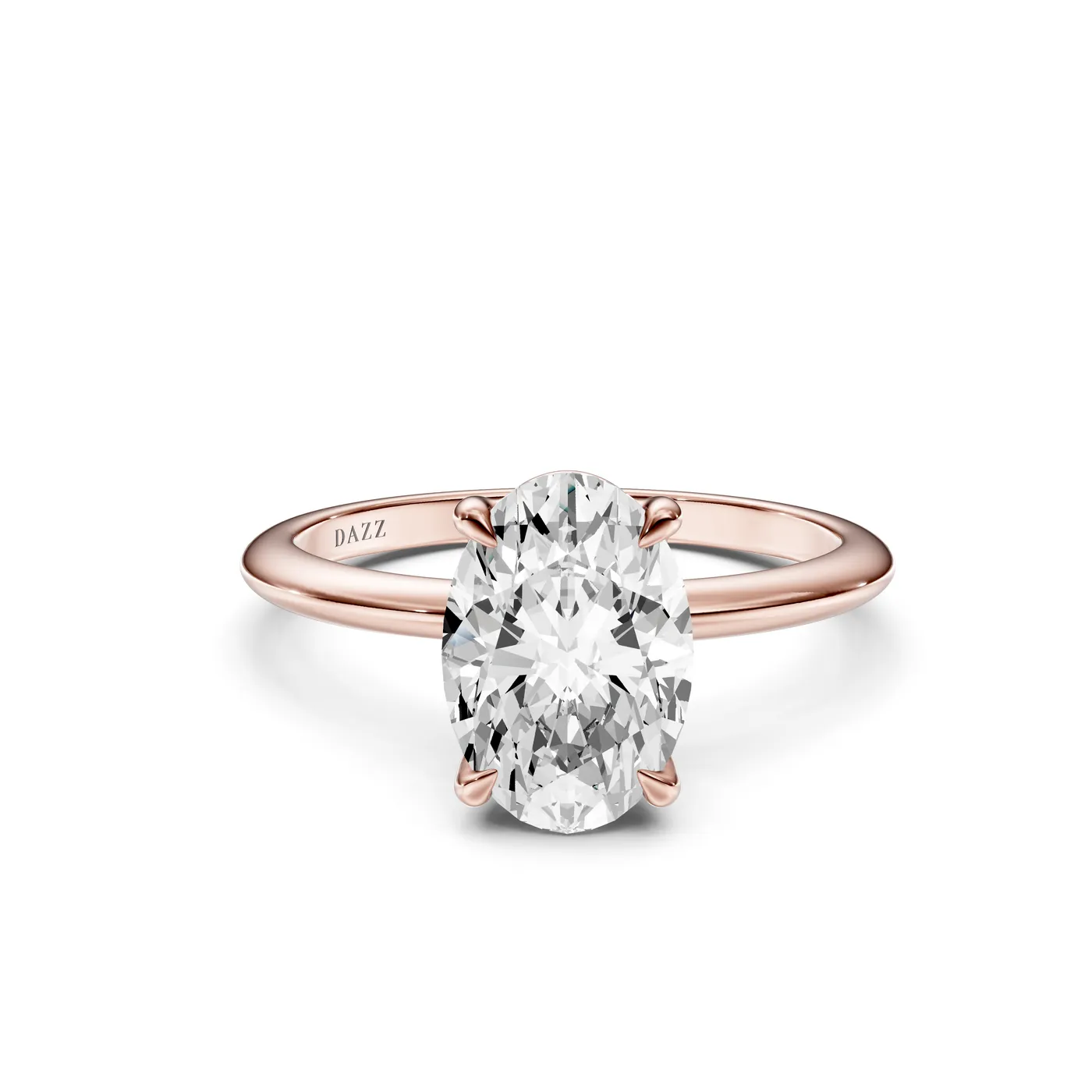
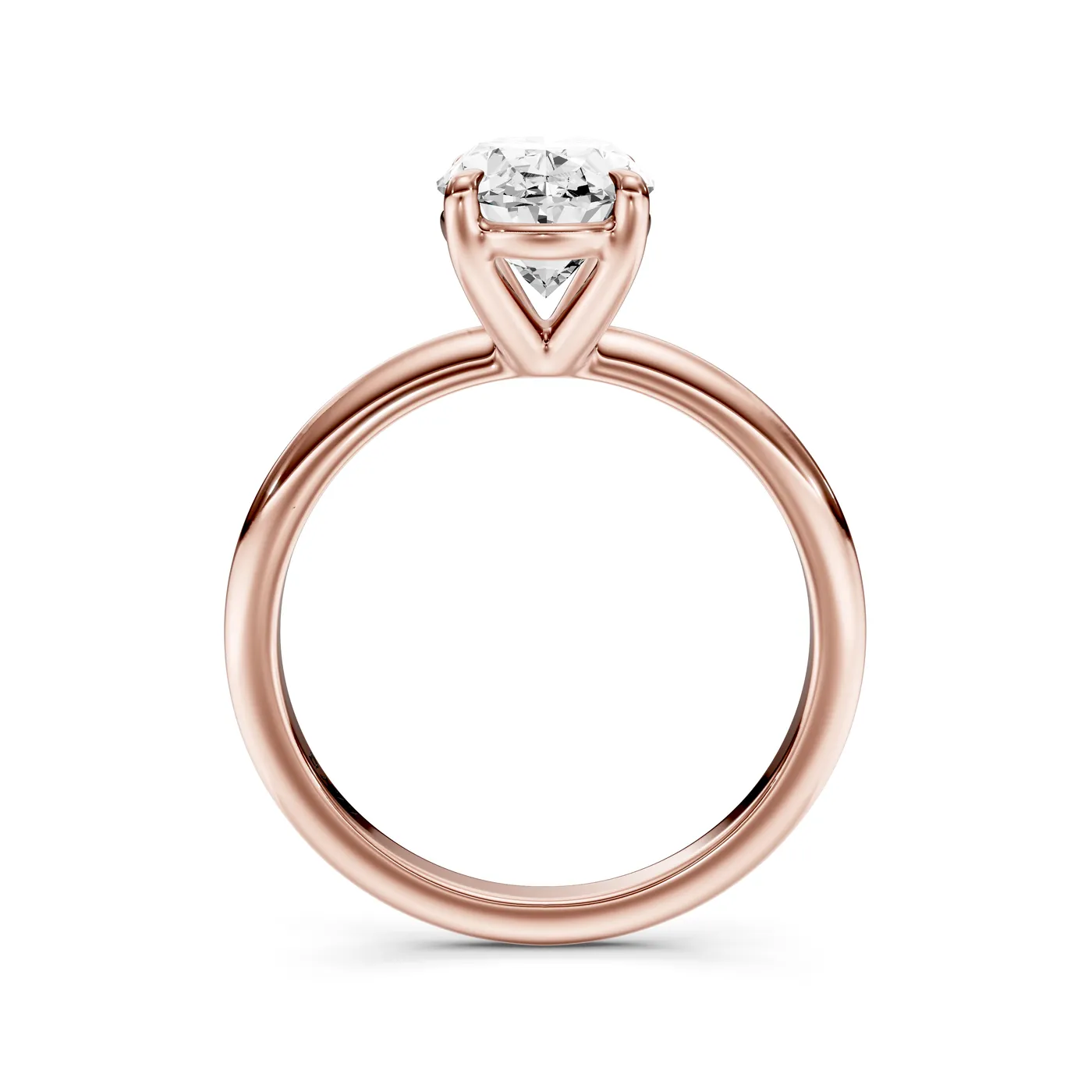
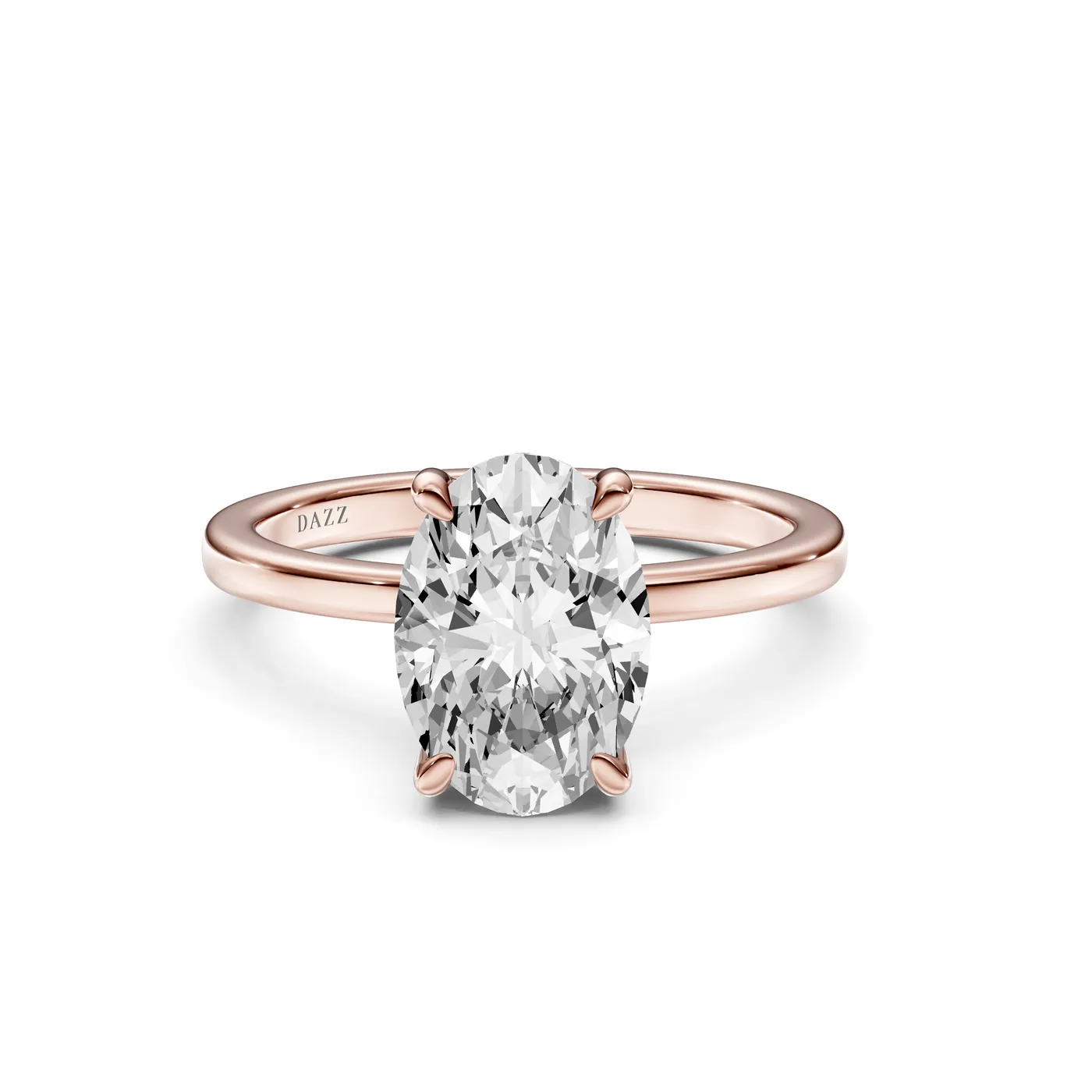
The ring we make more often than any other. A 2-carat oval measures about 10 × 7 mm face-up; at a length-to-width ratio between 1.3 and 1.5 it reads as long without looking narrow, and it makes the finger look longer. Every oval carries a faint bow-tie, a darker band across the middle; a well-cut one keeps it faint, and we show you the stone face-up before it is set. In our Oval Solitaire Ring in 14K gold, with an IGI-certified D–E VVS2–VS1 stone, it is $1,920 lab-grown and $28,800 natural, shipping included.
Chapter 03
2 carat vs 1.5 carat vs 3 carat: size and price
Lab-grown pricing has a shape of its own, and it is worth seeing before you settle on a size. Below are our prices for two rings at 1, 1.5, 2 and 3 carats with a lab-grown center stone, in 14K gold, with the cost of each step up, and underneath, what each weight measures on the hand.
| Center stone | Oval Solitaire RingLab-grown · IGI certificate | Oval Hidden Halo RingLab-grown · IGI certificate | ||
|---|---|---|---|---|
| Price | Step up | Price | Step up | |
| 1 ct | $1,200 | — | $1,260 | — |
| 1.5 ct | $1,560 | +$360 | $1,640 | +$380 |
| 2 ct | $1,920 | +$360 | $2,020 | +$380 |
| 3 ct | $2,280 | +$360 | $2,390 | +$370 |
Shipping included · import duties and taxes not included · Lab-grown center stone, D–E · VVS2–VS1, in 14K gold. The price list shows the same curve for natural diamonds.
| Face-up size | 1 ct | 1.5 ct | 2 ct | 3 ct |
|---|---|---|---|---|
| Round | ≈ 6.5 mm | ≈ 7.4 mm | ≈ 8.1 mm | ≈ 9.3 mm |
| Oval | ≈ 7.7 × 5.7 mm | ≈ 9 × 6.5 mm | ≈ 10 × 7 mm | ≈ 12 × 8 mm |
Approximate, for well-cut stones; an individual stone can run half a millimeter either way.
Read the steps. On the Oval Solitaire Ring, going from 1.5 to 2 carats adds $360, and going from 2 to 3 carats, a whole extra carat, adds $360 (our per-carat price flattens above 2 carats). In a lab-grown diamond the price rises by increments, because a larger crystal is only somewhat harder to grow than a smaller one. In a natural diamond it rises by multiples, because a large clean crystal is rare in a way a large grown one is not: the same ring with a natural center stone moves by $19,200 between 2 and 3 carats.
What you see for the money. 2 carats is about a third heavier than 1.5 carats but only about a fifth larger face-up: on a round, 8.1 mm against 7.4 mm. That is enough to see across a table, and it is the step most people notice on their own hand. The step to 3 carats is a further millimeter or so, and it is where a stone starts to be a statement.
Where the sweet spot is. 2 carats is a natural stopping point, and for a reason: it is the size at which the stone reads as clearly large on the hand while the ring stays comfortable to wear and the price stays under most people’s ceiling. Going to 3 carats costs relatively little in lab-grown, as the table shows, and some of our customers do; a 3-carat oval is close to 12 × 8 mm. Above 2 carats, then, the choice is about proportion and taste rather than budget. A 3-carat stone on a slim size 5 finger is a great deal of diamond, and a 1.5-carat stone on a size 8 hand can look smaller than expected. Try it on a hand, on a video call if need be, and let the hand decide.
Chapter 04
What is included in the price
Every price on this site is for the finished ring, delivered. Here is what that covers, and the one thing it does not.
The center stone and its certificate
An IGI report for a lab-grown center stone, a GIA report for a natural one, with the report number laser-inscribed on the girdle. You choose the stone from the reports we send before payment.
The ring, made in our workshop
Cast, set and polished at the Israel Diamond Exchange in 14K gold, in white, yellow or rose; the color does not change the price. Side diamonds, where the design has them, are included.
Insured express shipping, worldwide
By courier, tracked and insured for the full value, 2 to 5 business days in transit to your door.
Gift packaging
The ring in its box, with the certificate and the papers, packed for giving.
Lifetime manufacturer's warranty
Against manufacturing defects in the setting, structure and casting, for as long as you own the ring, with service and cleaning at our workshop.
Resizing
The first resizing is free, at any time. Shipping to our workshop and back is at your expense.
Returns within 14 days
Collection designs may be returned within 14 days of delivery, unworn and in their original packaging with the certificate, for a refund; return shipping is at your expense. Rings from the builder are made to your specification and are exchanged or adjusted rather than refunded.
Not included: duties and taxes
Import duties, customs fees and local taxes, where they apply, are collected by the carrier or the customs authority of the destination country and paid by the recipient. They vary by country, and we cannot quote them for you.
The full wording of every policy, including the warranty, is in the terms of sale.
Chapter 05
Which grade to choose at 2 carats
Larger stones show more. At 2 carats each facet is larger and the body of the stone deeper, so a faint tint is easier to see and an inclusion has more room to be found. A G color that is safely white at 1 carat can read slightly warm at 2, particularly in an oval or an emerald cut, whose long facets hold color; an SI1 inclusion that hides in a 1-carat round may sit in plain view in a 2-carat emerald. This is why the grade advice you read for 1-carat stones does not carry over unchanged.
What we set, and why. The lab-grown center stones we set are D–E color and VVS2–VS1 clarity with an IGI report. That is a step above what most guides call the sweet spot, and the reason is simple: in lab-grown, the price difference at 2 carats between a G VS2 and a stone at the top of the scale is comparatively small, so there is little reason to accept any tint or any inclusion a loupe could find. Everything we set is eye-clean by a wide margin. If you are buying elsewhere, our honest floor at 2 carats is G color and VS2 clarity for a round or an oval; for the step cuts, emerald and asscher, we would go to VS1, because their open facets give an inclusion nowhere to hide.
Cut matters most. Color and clarity describe what the stone is; cut decides what it does. A 2-carat stone with good proportions returns light across its whole face; a deep or shallow one looks smaller than its weight and dull in the middle. For a round, look for an Excellent or Very Good cut grade on the report. Most reports give no cut grade for fancy shapes (IGI grades some), so look at polish and symmetry, at the depth, and, on an oval, at the bow-tie: the darker band across the middle that every oval has and a good one keeps faint. The length-to-width ratio is a matter of taste; most people find an oval between about 1.3 and 1.5 the most pleasing.
Reading the certificate. The report gives the measurements in millimeters, which say more about how the stone will look than the carat weight does; two 2-carat ovals can differ by a millimeter in length. It gives the color and clarity grades, the polish and symmetry, and the fluorescence, and it states plainly that the stone is laboratory grown. The report number is inscribed on the girdle, and we check it under the loupe before the stone goes to the bench. We send the reports for the stones we can offer before you pay, and we are glad to walk through them with you on a call. There is more on what a report does and does not tell you in the lab-grown vs. natural guide.
Chapter 06
Five mistakes people make at 2 carats
None of these is a disaster, and all of them are easy to avoid once you know to look. They are the five we see most often in rings that come to our bench from elsewhere.
- 01
Buying weight instead of millimeters. Two 2-carat stones can differ by a millimeter in length; a deep stone hides its weight below the girdle, where nobody sees it. Read the measurements on the report before the carat weight.
- 02
SI clarity in a step cut. Emerald and asscher facets are open windows. An inclusion that a brilliant cut would scatter sits in plain view in a step cut at this size, which is why our floor there is VS1.
- 03
A strong bow-tie in an oval. Every oval has a faint dark band across its middle. A heavy one is a cutting fault, and no setting hides it. Ask to see the stone face-up, in daylight, on a video call.
- 04
A head built for a smaller stone. A 2-carat stone needs prongs and a head made for it. Stretched around a stone this size, thin prongs wear sooner and the stone sits higher than it should. Our settings at 2 carats are made for the stone.
- 05
Not matching the girdle inscription to the report. The report number is laser-inscribed on the girdle. We check it under the loupe before packing; check it again when the ring arrives, and keep the report with the ring.
Chapter 07
How to order
Most of our customers abroad have never bought a ring from another country before, so here is the whole path in four steps. Nothing is charged until every detail is confirmed.
Choose the design, the shape and the gold
Start in the ring collection or in the ring builder, where you combine a setting, a shape and a gold color and watch the price update. Set the center stone to 2 carats, and switch between lab-grown and natural to see both prices.
Open the ring builderSend the request, with the ring size if you know it
Use the order request on the product page, or write to us on WhatsApp. Any sizing standard is fine, US, UK or European; if you do not know the size, say so, and we will guide you to find it without spoiling the surprise.
How to find her ring sizeWe reply within one business day, with the stones
A personal reply, not an automated one, with the IGI reports for the 2-carat stones we can offer for the design, the exact measurements of each, and any question we have about the details. You choose the stone; if you would like to see it, we put it in front of the camera on a video call.
Secure payment, then the workshop, then your door
Once everything is confirmed we send a secure card payment link. The ring is then cast, set and polished in our own workshop at the Exchange in about 10 business days, the certificate is matched to the girdle inscription, and an insured express courier brings it to you in 2 to 5 business days. Import duties or taxes, where they apply, are collected on delivery.
Anything unclear along the way is answered in the questions we are asked most, or by us, on WhatsApp, within one business day. And when the time comes, we make the matching wedding band to sit flush against the ring.
Chapter 08
What we see in our workshop
We make 2-carat lab-grown rings most weeks, so here is what the question looks like from our side of the bench, with the caveat that this is our experience and not a survey.
The size people ask for. In our experience 2 carats is the size most lab-grown buyers choose, by a clear margin. A few years ago the question was whether 1 carat was enough; now it is whether 2 is too much, and once the stone is on a hand the answer is usually no. Roughly half of US engagement-ring center stones in 2025–26 are lab-grown, by industry estimates, and from where we sit, 2 carats is the size that made that happen.
The shape. Oval leads in our orders; round and pear follow. The elongated shapes win because they look larger for the weight and lengthen the finger, and because they photograph well, which matters more than anyone admits. The 2-carat oval solitaire is the ring we make more often than any other.
The move from 1.5 to 2. Many people arrive with 1.5 carats in mind, because that was the natural-diamond budget they had grown used to, and go to 2 once they see that the step costs $360 on a solitaire. Very few go back. Going from 2 to 3 is rarer; those who do have usually seen a 3-carat stone on a hand and decided the hand can carry it.
Made for 2 carats
Four settings that carry a 2-carat stone well
Set the center stone to 2 ct on any card and switch between lab-grown and natural; the price updates as you go. Every ring is made to order in our workshop in about 10 business days.
Card prices are the 1-carat starting price; 2-carat prices are in the table above.
Questions and answers
What we are asked about 2 carats
From $1,920 at DAZZ: the Oval Solitaire Ring in 14K gold with a 2-carat IGI-certified D–E VVS2–VS1 stone, shipping included. Our halo, pavé and three-stone settings at 2 carats run to $2,300. US industry price guides put a finished 2-carat lab-grown ring at roughly $2,000 to $7,500 in 2026, depending on the grade and the setting.
See the full price listWe would love to meet you
The door is open
Message us on WhatsApp, book a video appointment, or, when you are in Israel, visit us at the Israel Diamond Exchange in Ramat Gan.