A guide from the maker · Diamond Exchange, Ramat Gan
Oval vs. Round Diamond: Which Should You Choose?
We cut and set both shapes every week, and we have no stake in which one you choose: at DAZZ they cost the same. Round returns the most light of any shape. Oval looks about a tenth larger for the same weight and makes the finger look longer. The rest is detail, and the detail is what this guide is for: size in millimeters, the bow-tie and how to judge it, the ratio to look for, what each shape shows in color, and how each sits on the hand.
By The DAZZ workshop team·Three generations of diamantaires at the Israel Diamond Exchange··Prices update automatically from our catalog
In this guide
- 01The short answer
- 02Price: oval vs. round at DAZZ and in the market
- 03Size: why an oval looks larger
- 04Sparkle, and the bow-tie
- 05The proportions that matter in an oval
- 06Color and clarity: what each shape shows
- 07On the hand and in the setting
- 08Which we would choose
- 09What we see in our workshop
- 10Questions and answers
Chapter 01
The short answer
Choose a round if the most sparkle and the most classic look are what you want, and if you would like a cut grade on the report to lean on. Choose an oval if you want the stone to look as large as it can for the weight, to lengthen the finger, and to feel a little more modern. Both are brilliant cuts, both are hard-wearing, and both have been cut for a hundred years, so neither will date.
The one thing an oval asks of you that a round does not is to look at the stone face-up before you buy, because of the bow-tie (chapter 04). We show every oval on camera for that reason.
| Point | Round | Oval |
|---|---|---|
| Brilliance | The most of any shape | Close behind; a softer, longer flash |
| Looks larger for the weight | The reference | About 8–10% more face-up area |
| On the finger | Classic, symmetrical | Lengthens and slims the finger |
| Bow-tie | None | Present in every oval; faint in a well-cut one |
| Price at DAZZ | Same price | Same price |
| Price in the US market, natural | The most expensive shape | Typically 10–25% less per carat |
| Cut grade on the report | Yes, from every laboratory | GIA gives none; judge it face-up |
| Chipping risk | No points to protect | No points either; equally hard-wearing |
| Trend | The all-time bestseller | The fastest-growing shape; leads our orders |
IGI certificate · lifetime warranty · made to order in about 10 business days · insured shipping
Chapter 02
Price: oval vs. round at DAZZ and in the market
At DAZZ the shape does not change the price. An oval and a round of the same weight and grade cost the same in every setting we make, lab-grown or natural. The table is generated from the pricing engine that runs our catalog, for six settings we make in both shapes, each with a 1-carat center stone in 14K gold. Every figure is for the finished ring, shipping included.
| Setting · 14K gold · 1 ct | Ovallab-grown · natural | Roundlab-grown · natural |
|---|---|---|
| Solitaireoval · round | $1,200$4,690 | $1,200$4,690 |
| Hidden halo+ 0.15 ct of side diamondsoval · round | $1,260$5,940 | $1,260$5,940 |
| Halo+ 0.15 ct of side diamondsoval · round | $1,260$11,600 | $1,260$11,600 |
| Pavé band+ 0.40 ct of side diamondsoval · round | $1,320$6,540 | $1,320$6,540 |
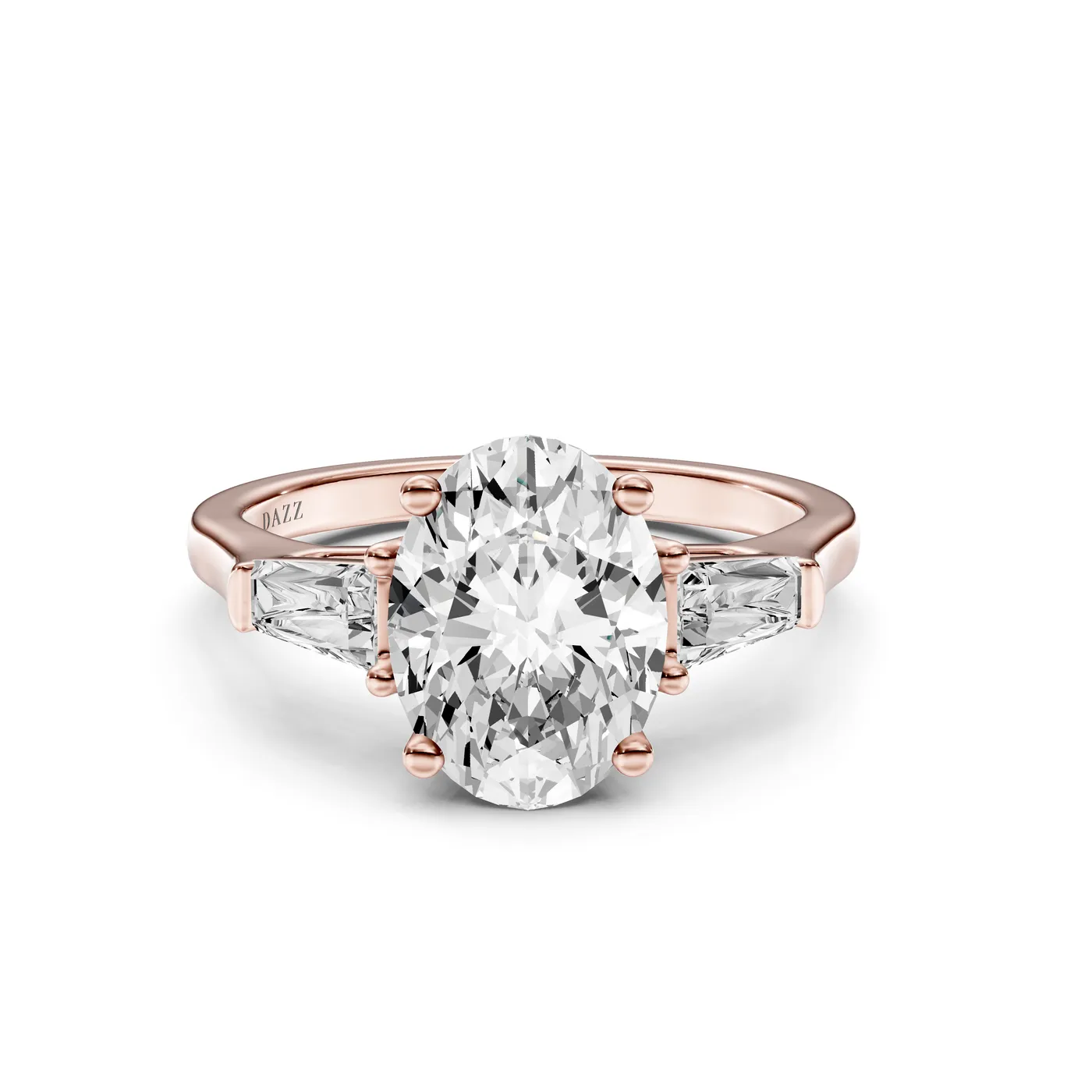
| Three-stone, tapered baguettes+ 0.50 ct of side diamondsoval · round | $1,440$12,480 | $1,440$12,480 |
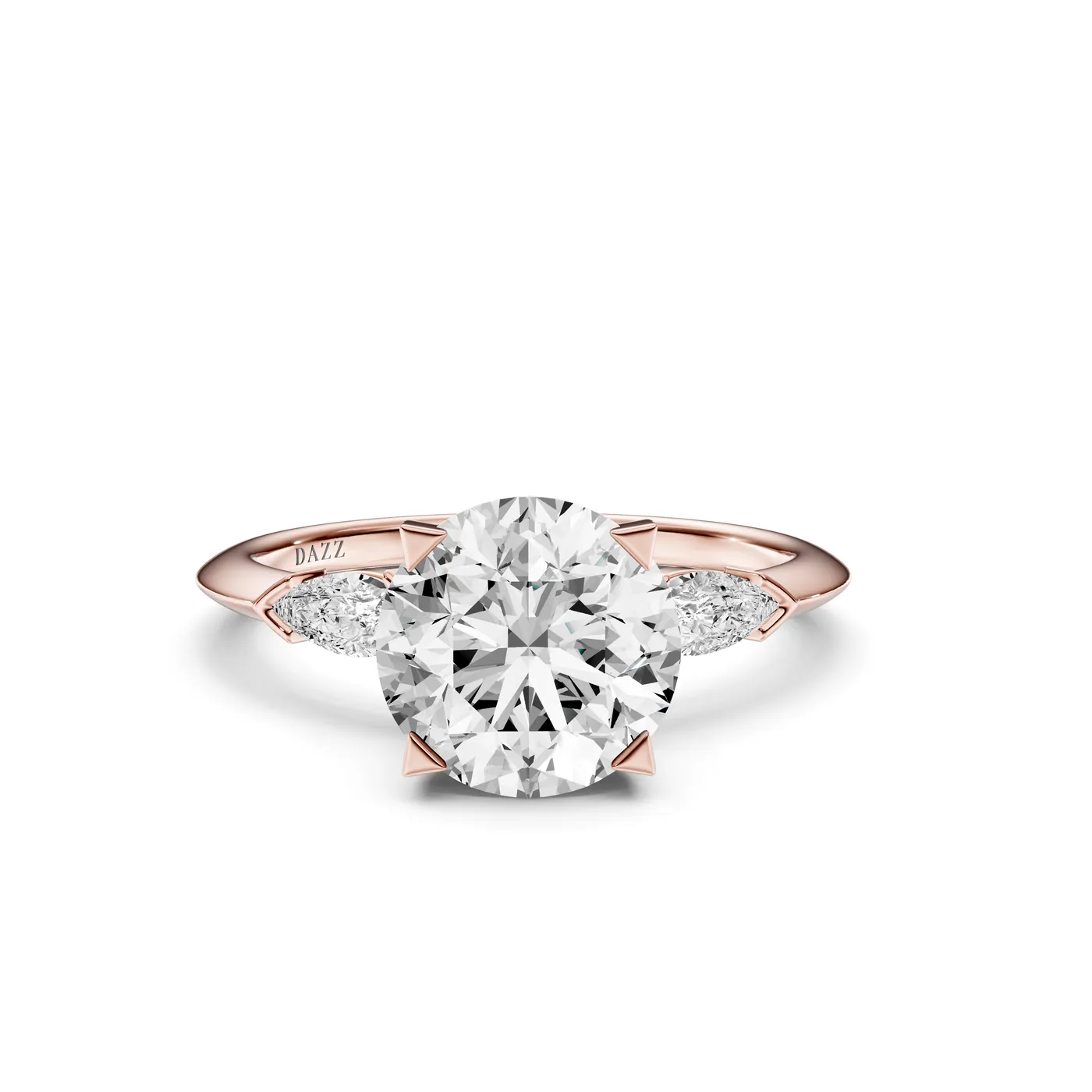
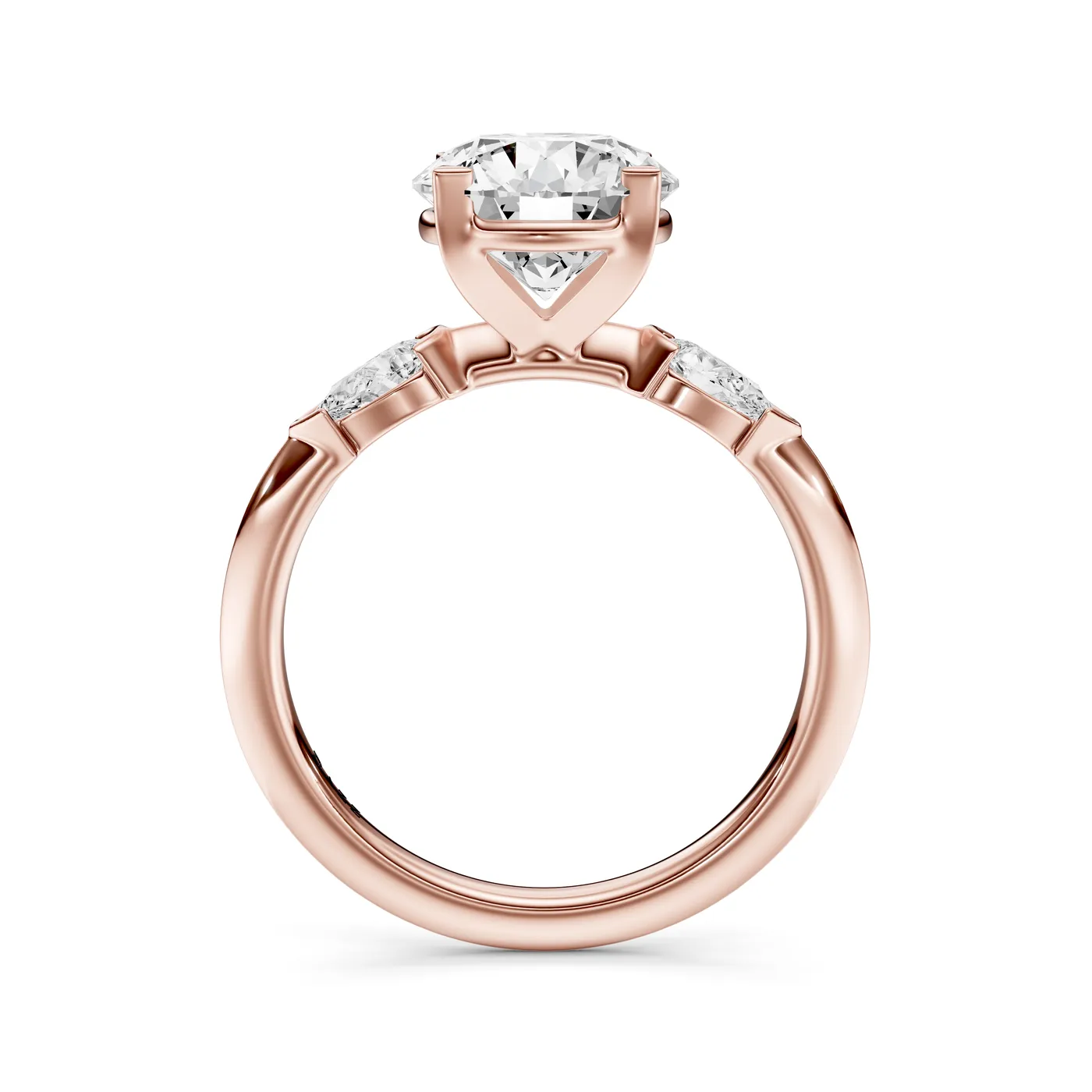
| DAZZ Ring, marquise side stones+ 0.40 ct of side diamondsoval · round | $1,260$12,800 | $1,260$12,800 |
Shipping included · import duties and taxes not included · Lab-grown center stones are IGI · D–E · VVS2–VS1; natural center stones are GIA · G–H · VS2. Side diamonds, where the design has them, are included; gold color does not change the price. See the full price list or price any ring in the builder.
Why the market charges more for a round. A round brilliant is cut from an octahedral rough crystal, and the shape throws away more of it than any other cut: a finished round often keeps only forty to fifty percent of the rough it came from. An oval keeps more, so the same crystal yields a heavier oval than round, and the cutter can charge less per carat for it. Add the fact that round is the most demanded shape, and in the natural-diamond market a round of a given grade typically costs ten to twenty-five percent more per carat than the oval next to it.
Why we price them the same. We buy and cut for our own workshop, and we price the finished ring rather than the shape. The practical result for you: the market’s oval discount turns into size instead of savings. At the same price, the oval gives you a stone that looks larger on the hand; the round gives you the most light. Which of those you would rather have is the whole question, and chapters 03 and 04 are the answer.
For larger stones the same logic holds: our Oval Solitaire with a 2-carat lab-grown center stone is $1,920 ($17,900 with a natural stone), in either shape. The 2-carat guide prices eleven settings at that weight.
Chapter 03
Size: why an oval looks larger
Carat is weight, not size, and the two shapes carry their weight differently. A round is the deepest of the brilliant cuts; a good deal of its carat sits below the girdle, where it drives the sparkle and where nobody sees it. An oval is cut a little shallower and spreads the same weight along a longer outline, so from above you see more stone. Measured face-up, a well-cut oval shows about eight to ten percent more area than a round of the same weight.
| Weight | Round, across | Oval, length × width | Difference |
|---|---|---|---|
| 1 ct | ≈ 6.5 mm | ≈ 7.7 × 5.7 mm | about 8–10% more face |
| 1.5 ct | ≈ 7.4 mm | ≈ 9 × 6.5 mm | about 8–10% more face |
| 2 ct | ≈ 8.1 mm | ≈ 10 × 7 mm | about 8–10% more face |
| 3 ct | ≈ 9.3 mm | ≈ 12 × 8 mm | about 8–10% more face |
Approximate figures for good proportions; an individual stone can run half a millimeter either way, which is why the measurements on the certificate matter more than the carat weight. The oval’s face-up advantage is about 8–10% at every weight.
On the finger, the effect is larger than the numbers. The long axis of an oval runs along the finger, so the eye reads length as size and the finger itself looks longer and slimmer. A 1-carat oval at about 7.7 mm long covers nearly half the width of a size-6 finger; the 6.5 mm round next to it looks tidy and a touch smaller. This is the reason most people who choose an oval give, and it is a good one.
Where the round wins on size. A round shows the same face from every angle, so it never looks narrow, and a round set low in a solitaire looks larger than the same round set high, because the eye takes the band into the measure. If you love the round and want more presence, the answer is a slightly larger stone rather than a different shape: the step from 1 to 1.5 carats costs less than most people expect in a lab-grown stone.
Chapter 04
Sparkle, and the bow-tie
Round returns the most light. The round brilliant’s 57 facets were worked out a century ago to send as much light as possible back to the eye, and every laboratory grades how well a given stone does it, from Excellent down. Nothing else sparkles quite like a well-cut round, and it is the only shape where you can buy that sparkle from the paper alone.
An oval is a brilliant cut too, with the same facet family stretched along a longer outline, so a good oval is bright, with a longer and softer flash than a round and a little more contrast in the center. Side by side in daylight you can see the round is brighter; on its own, on a hand, a well-cut oval reads as a very lively stone. The trade is a little brilliance for a good deal of spread.
The bow-tie. Every oval has a darker band across its middle, shaped like a bow-tie, where the facets cannot return light at that angle. In a well-cut stone it is faint, it moves as the hand moves, and it is part of the character of the shape. In a badly cut stone it is a heavy black bar that stays put, and no setting or gold color hides it. It is not on the certificate, which is why an oval has to be judged with the eyes.
How we judge it. Face-up, in daylight or under a plain white light, at arm’s length, and then rocking the stone slowly. A bow-tie that flickers is fine; one that sits still and dark is not, and we do not set those. On a video call we do exactly this in front of the camera, so you see what we see before the stone goes into the ring.
Chapter 05
The proportions that matter in an oval
A round comes with a cut grade and a hundred years of agreed proportions. An oval does not: GIA gives no cut grade for fancy shapes, and where a report does carry one, it is a starting point rather than a verdict. So here is what we look at on the paper and at the bench.
Length-to-width ratio: 1.30 to 1.50
Length divided by width, printed on the report. Between 1.30 and 1.50 the stone reads as a classic oval; our default is around 1.35 to 1.45. Above 1.50 it is noticeably elongated, which lengthens the finger further and suits a long hand; below 1.30 it starts to look like a soft round. There is no wrong answer here, only taste, and it is worth seeing two ratios on a hand before deciding.
Depth and table
We look for a depth somewhere between about 58 and 63 percent of the width and a table in the high fifties to low sixties. A stone much deeper than that hides weight below the girdle and looks smaller than its carat; one much shallower can look glassy and lose fire. These are guides, not rules; the stone in front of us decides.
Symmetry, and the shape of the ends
The two halves of an oval should mirror each other and both ends should be evenly rounded; pointed or squared ends, or one end fuller than the other, are cutting shortcuts. Symmetry is on the report as Excellent or Very Good, and we do not set below Very Good in an oval.
Polish, and the girdle
Polish should be Excellent or Very Good. The girdle should be even all the way around and neither knife-thin, which chips, nor very thick, which wastes weight. On the report it is described in words; at the bench we check it under the loupe before the stone is set.
Face-up, in daylight
After all of that, the stone still has to look right. We put every oval face-up under daylight and look for the bow-tie, for the brightness of the ends, and for any dead window in the center, and we show you the same view on camera. The numbers narrow the field; the eye chooses.
For a round, the report does most of this work: an Excellent cut grade with Excellent polish and symmetry is a stone we would set without hesitation. How to read the rest of the report, for either shape, is in the certificates chapter of the lab-grown vs. natural guide.
Chapter 06
Color and clarity: what each shape shows
Color. A round mixes its light so thoroughly that a faint tint is hard to see; H color reads white in a round. An oval is shallower at the ends, and the ends are where a tint shows first, so we keep an oval one grade higher than we would a round: G or better in a natural stone. The lab-grown stones we set are D–E, at the top of the scale, so in lab-grown the question does not arise; our natural stones are G–H, which is white in either shape.
Clarity. Both are brilliant cuts, and both scatter light well enough to hide a small inclusion that a step cut would put on display. At VS2 in a natural stone and VVS2–VS1 in a lab-grown one, nothing is visible to the eye in either shape. An oval has one place to check that a round does not: the ends, which are thinner, where a dark inclusion near the tip can show. We look there first.
Fluorescence. Neither shape is more affected than the other. Medium or stronger blue fluorescence can make a stone look slightly hazy in daylight, so we prefer none or faint in both shapes, and it is on the report.
Which certificate you will see, and what the grades mean in plain language, is in the 4Cs chapter of the engagement ring guide.
Chapter 07
On the hand and in the setting
Finger shape. An oval flatters most hands, and short or wide fingers most of all, because its length draws the eye along the finger. A round suits every hand and is the safer choice on a very slim finger, where a long oval can look as if it is reaching for the knuckle. If in doubt, we put both on a hand on a video call; it settles the question in a minute.
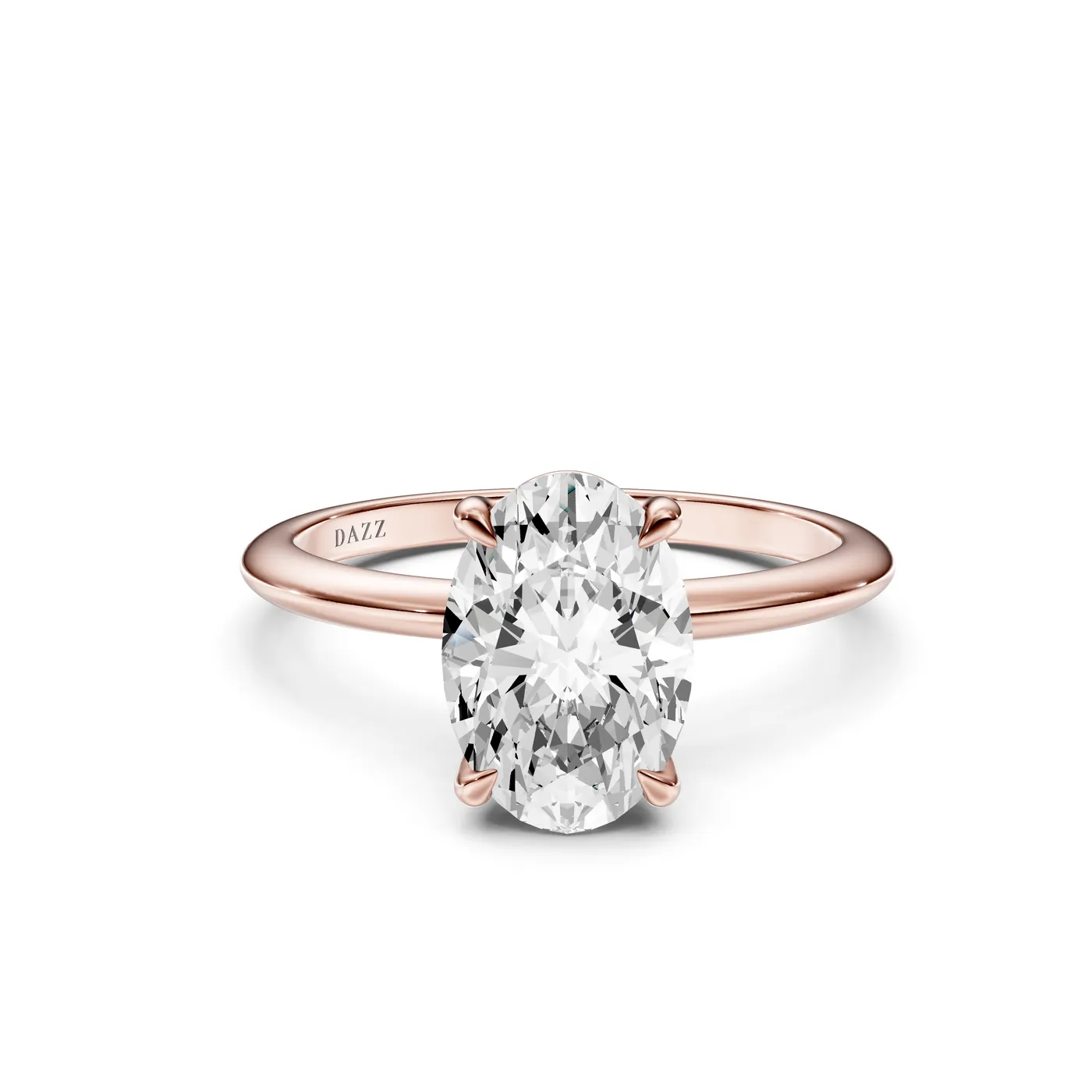
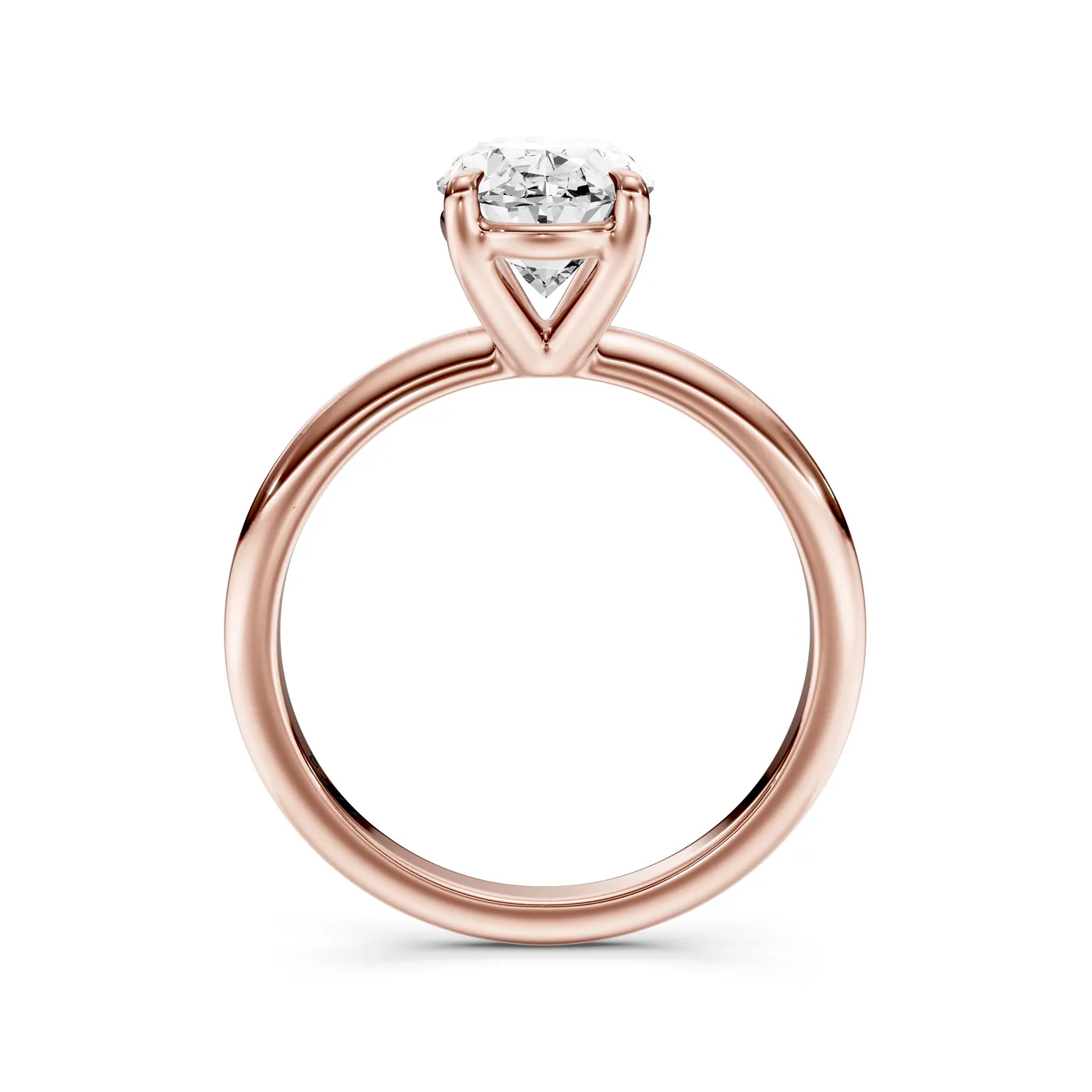
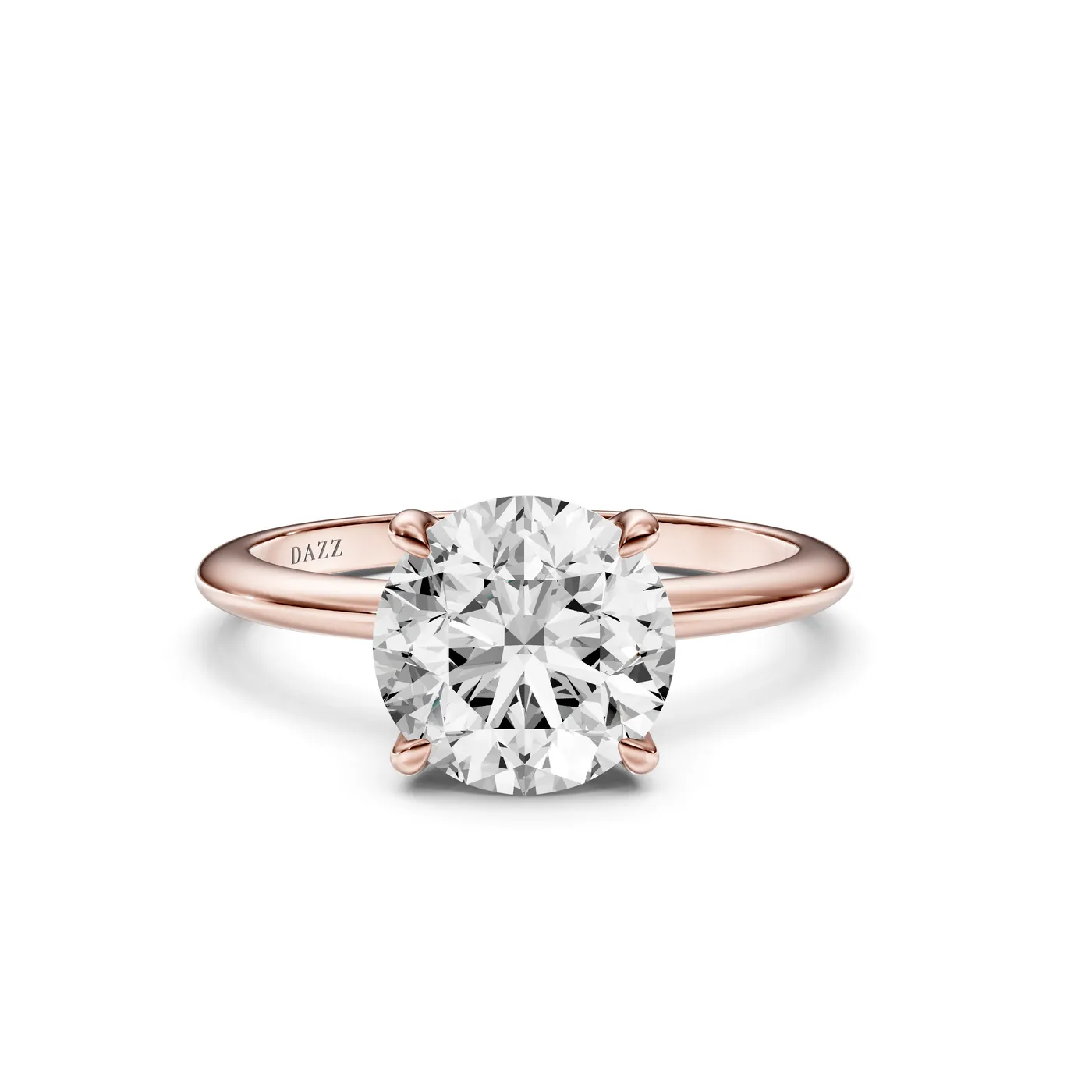
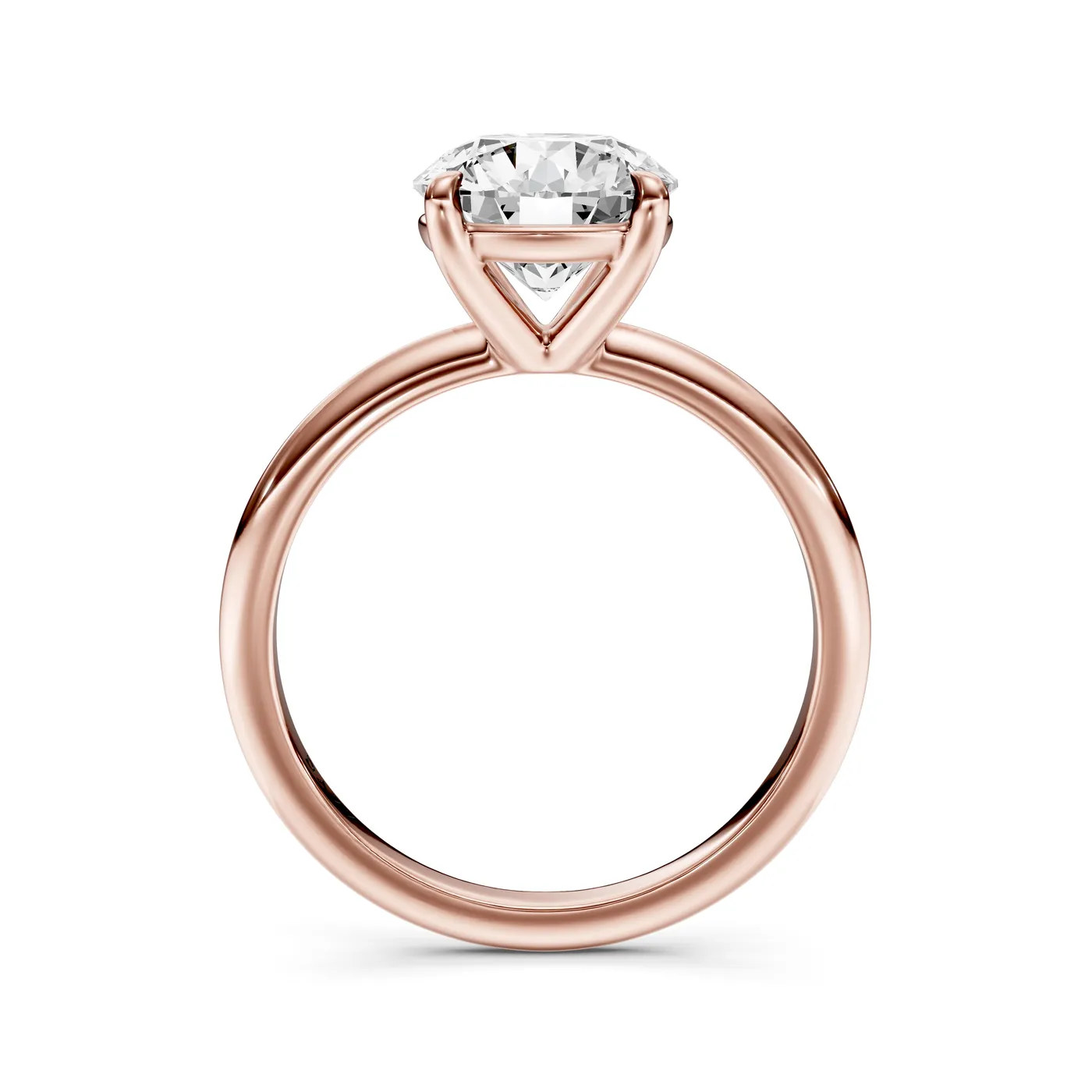
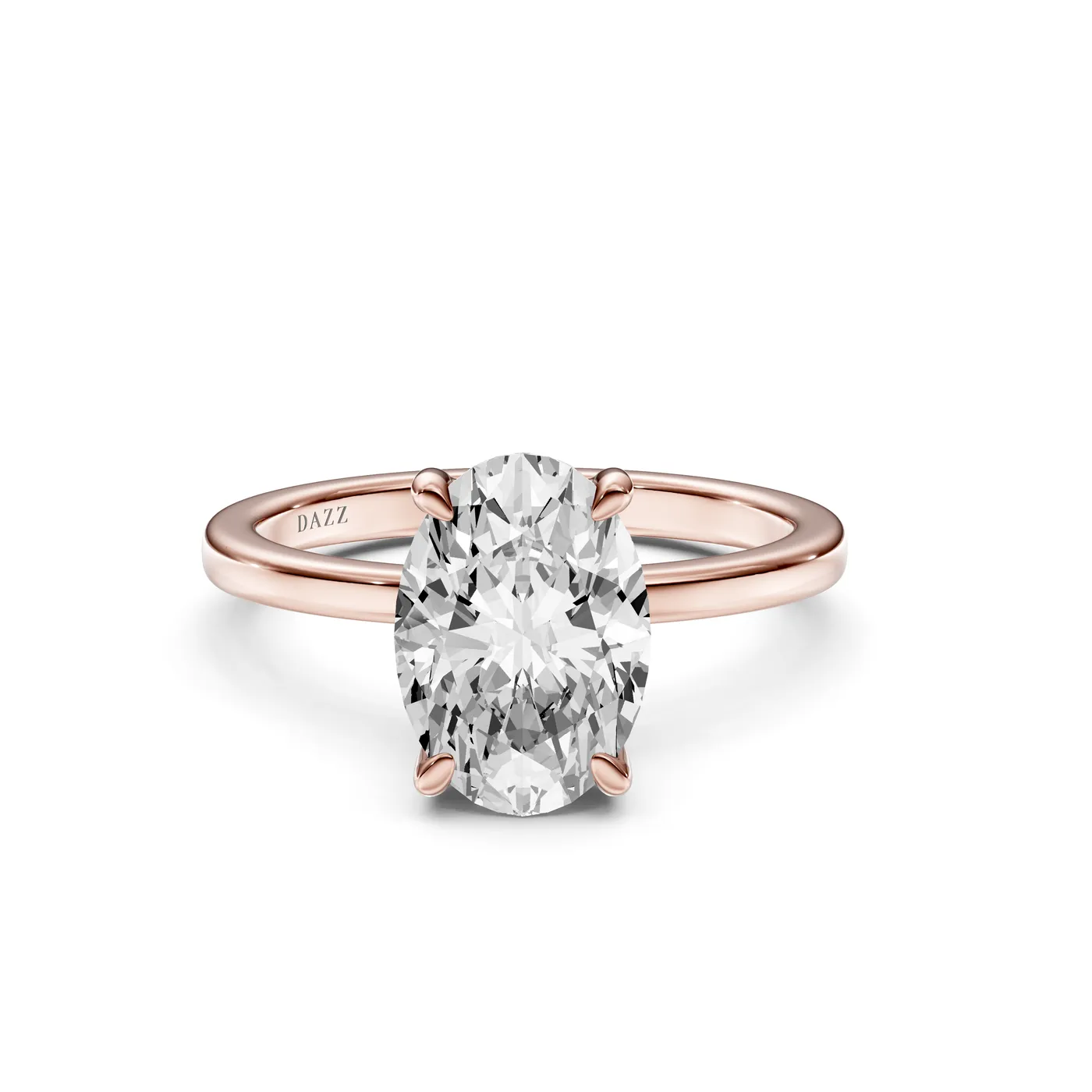
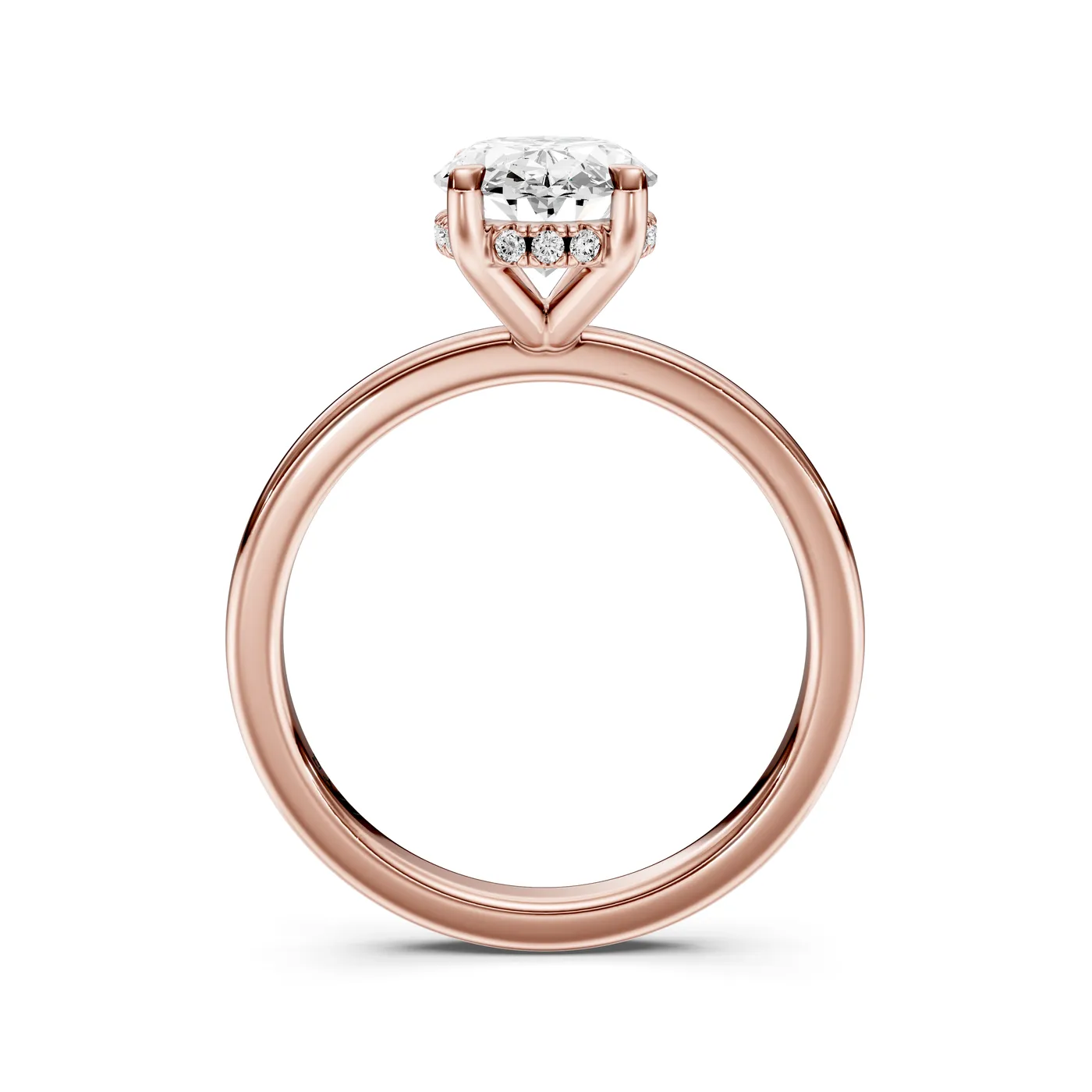
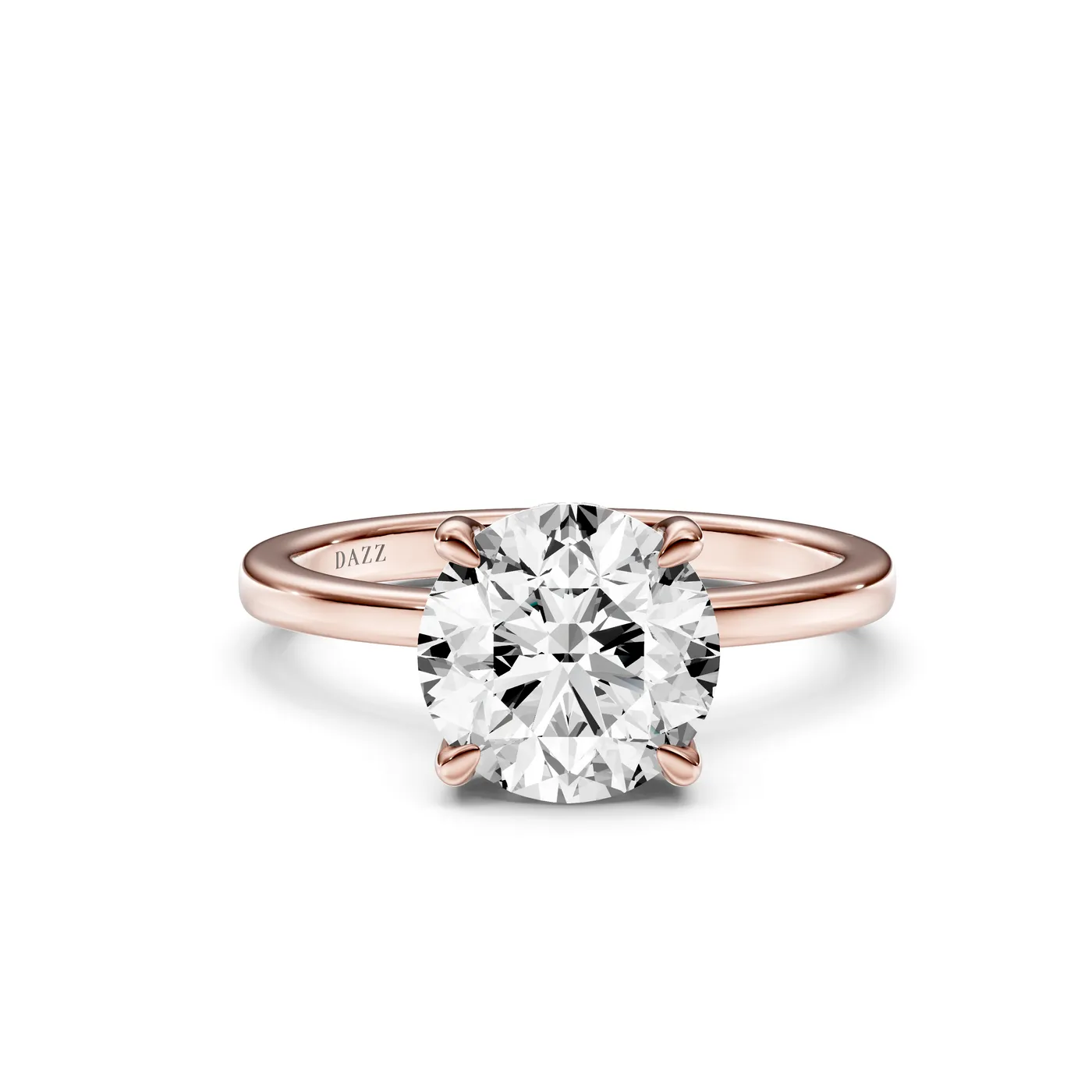
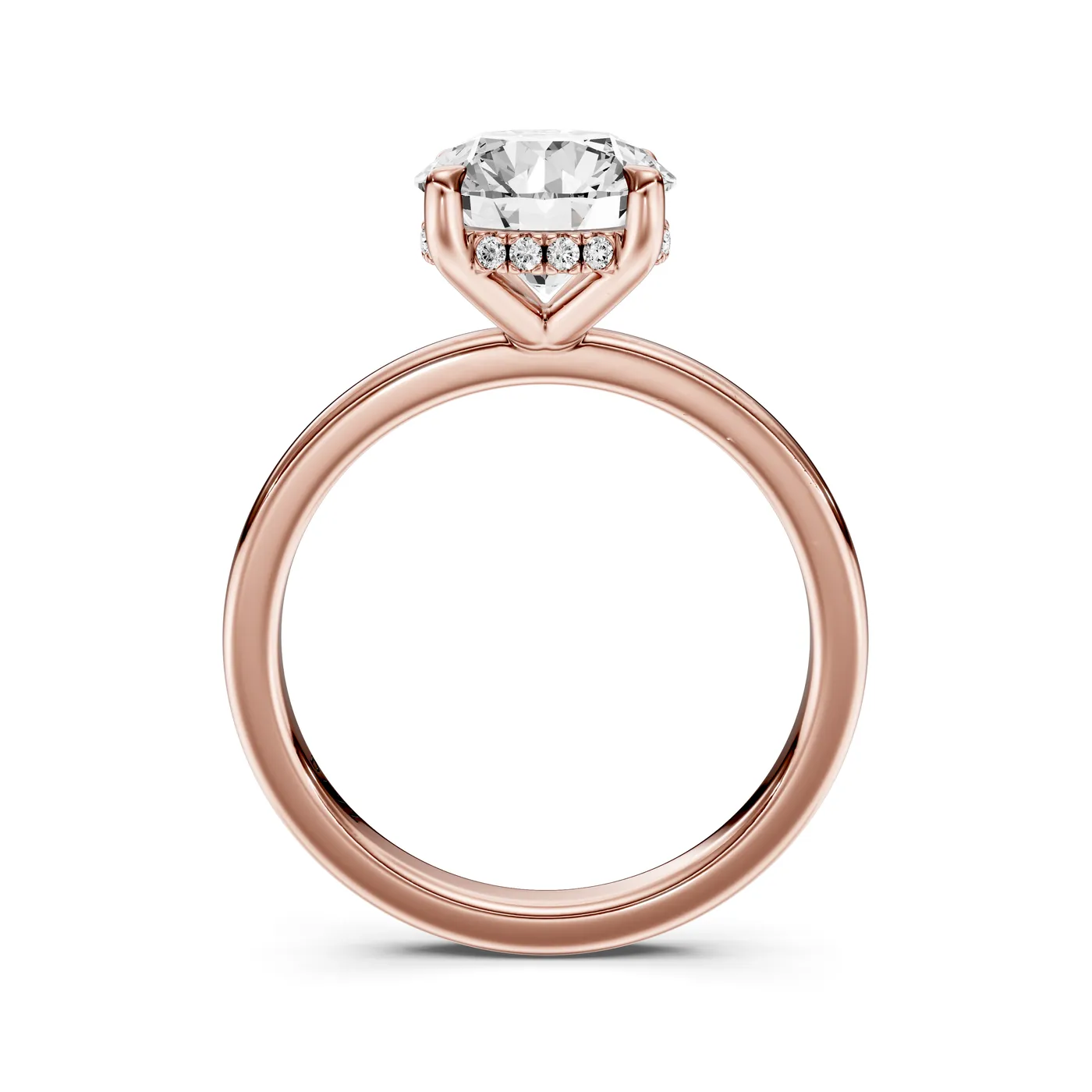
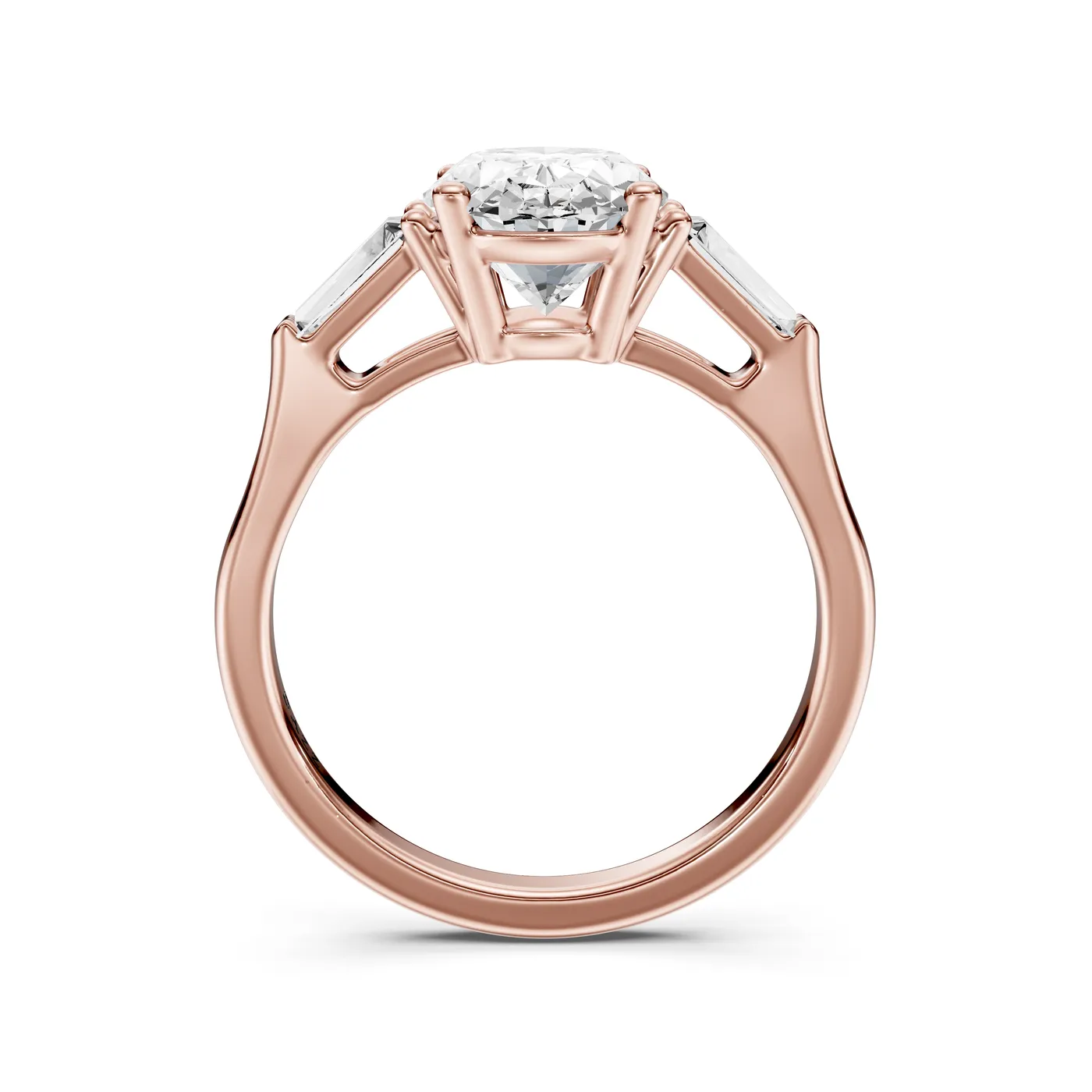
Settings. Both shapes take every setting we make. A round in a four-prong solitaire is the classic engagement ring; an oval in a hidden halo or on a pavé band is the ring most of our customers abroad ask for. An oval also pairs unusually well with tapered baguettes on either side, which continue its line, and it can be set east-west, across the finger, for a different look with the same stone. Four prongs suit both shapes; six on a round is a more traditional look, and on an oval four prongs at the diagonals keep the outline clean.
The wedding band. A round solitaire sits high enough that a straight band slides underneath it. An oval set low, as we set it, sometimes needs a slightly curved band to sit flush; we make the matching band for either, so it is never a problem, only something to decide together.
Gold color. Both shapes look their best in all three golds. Yellow and rose warm a stone slightly, which flatters a G–H natural diamond in either shape; white gold shows a D–E lab-grown stone at its whitest. The color does not change the price, and you can switch it on any product page.
Chapter 08
Which we would choose
It depends on what you are buying the stone for, and here is how we would decide it across our own bench.
Choose the round if sparkle is the point, if you want a ring that will look exactly as classic in thirty years, if you prefer to lean on a cut grade rather than your eye, or if the finger is very slim. A round is also the easier stone to match with a wedding band and the easier one to reset later.
Choose the oval if you want the most stone for the weight, if the finger is short or wide, if you like a ring that looks a little more current, or if you are drawn to the elongated shapes and want the one with the least risk in them: unlike a pear or a marquise, an oval has no point to chip and no shape to argue about.
If you cannot decide, see both on a hand; the decision is nearly always made in the first minute. And since at DAZZ the price is the same, there is no reason to let the budget make the choice for you.
Chapter 09
What we see in our workshop
We set both shapes every week, so here is the question from our side of the bench, with the caveat that this is our experience and not a survey.
Oval leads our orders. By a clear margin, and for several years now, in lab-grown and natural alike. Round is second, then pear. By industry estimates round is still the most bought shape in the world; the oval is the fastest-growing, and among our customers abroad it has already overtaken. The reason people give is nearly always the same: it looks bigger, and it looks good in photographs.
The stones we reject. We reject more ovals than rounds at the buying stage, and almost always for the bow-tie or for uneven ends. A round with an Excellent cut grade is rarely a surprise in the hand; an oval with a beautiful report can still disappoint face-up. That is not a fault of the shape, only a reason to buy an oval from someone who has looked at it.
People who switch. Some arrive set on a round and leave with an oval after seeing both on a hand; a few go the other way, usually because they saw a round next to an oval in daylight and could not give up the sparkle. Both are right. We make both, we price both the same, and we would rather you chose with your eyes than with a guide, including this one.
Both shapes, made to order
Six rings, oval and round
Switch between lab-grown and natural and set the center stone on any card; the price updates as you go. Every ring is made in our workshop at the Exchange in about 10 business days.
Questions and answers
What we are asked about oval and round
At DAZZ they cost the same: the shape does not change the price, so a 1-carat lab-grown solitaire is $1,200 in either shape and $4,690 with a natural stone, shipping included. In the wider natural-diamond market a round is the most expensive shape and an oval of the same grade typically costs 10 to 25 percent less per carat, because the round wastes more of the rough crystal.
See the full price listWe would love to meet you
The door is open
Message us on WhatsApp, book a video appointment, or, when you are in Israel, visit us at the Israel Diamond Exchange in Ramat Gan.